The Perfect Healthy Picnic: Menus, Packing Physics and Food Safety
Somewhere between restaurant patios and eating hunched over the kitchen counter lives summer’s most underrated luxury: the picnic — fresh air, good light, food that tastes mysteriously better on a blanket, at a total cost of whatever you packed. The difference between a transcendent picnic and a warm, soggy disappointment is entirely logistics: menu engineering, cooler physics and one food-safety rule. Here is the complete playbook.

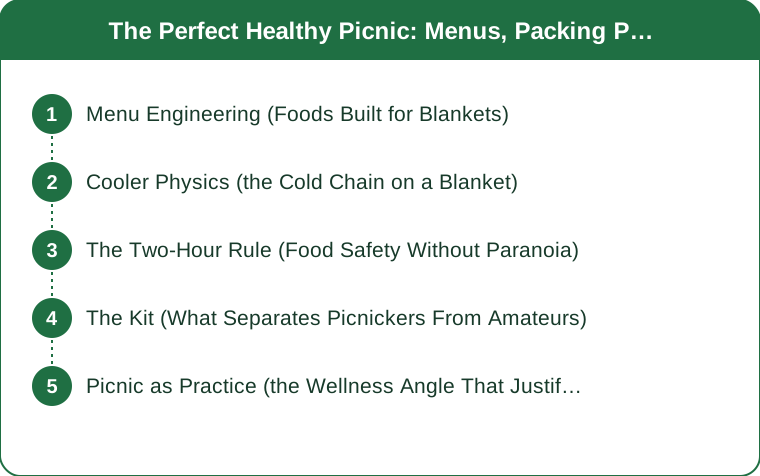
Menu Engineering (Foods Built for Blankets)
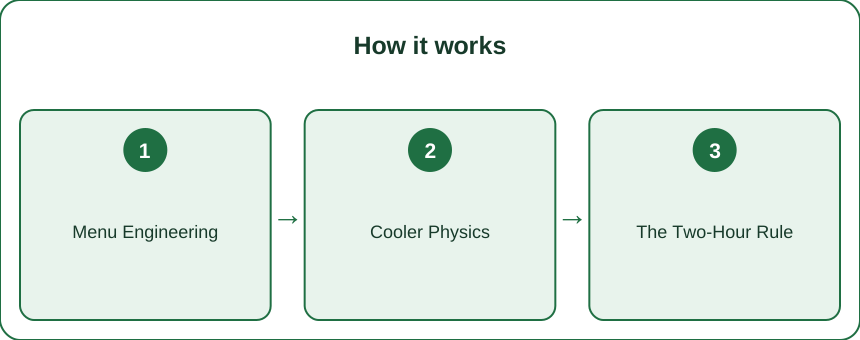
The picnic menu has design constraints restaurant food ignores: everything must survive transport, taste right at ambient temperature and eat gracefully without a table. The engineering winners: grain and pasta salads (they improve as they sit — dressing absorption is a feature; the make-ahead champion category), hand pies and frittata squares (structural food — eggs and pastry hold shape and temperature-tolerance), the deconstructed board (cheeses, cured or roasted proteins, breads, fruit, olives — assembly-on-blanket beats pre-made sandwiches that steam in their wrappers), sturdy vegetables with dips (the crudité economy: peppers, snap peas and carrots survive; lettuce salads wilt — dress them on site or choose kale and cabbage bases that marinate rather than collapse), and fruit with structure (grapes, berries, stone fruit, melon cubes — pre-cut at home, since knife-work on blankets is how picnics meet urgent care). The anti-menu: mayo-heavy salads in the sun (covered below), chocolate anything (physics), and elaborate hot dishes (fighting the format instead of enjoying it).
Cooler Physics (the Cold Chain on a Blanket)
The science of arriving cold: pre-chill everything — the cooler itself included (a cooler loaded warm spends half its ice budget cooling its own walls; ten minutes of ice-water swish or a night in a cool garage changes the math), ice packs beat loose ice for food (no meltwater soup — though a bag of ice doubles as drink-chiller and emergency cold), pack in layers by access-and-temperature (frozen packs on the bottom and against walls, proteins and dairy deepest, frequently-grabbed items on top — every opening costs cold, so pack drinks in a separate cooler if the group is thirsty: the drinks cooler gets opened ten times for every food-cooler opening), fill the voids (a full cooler holds cold dramatically longer than a half-empty one — towels or frozen water bottles as filler), and shade the cooler at the site (under the tree, draped with the spare blanket — direct sun doubles the heat load). Executed well, a decent cooler holds food-safe temperatures for a full afternoon. Executed as an afterthought, you get the warm-hummus experience that ends picnic careers.

The Two-Hour Rule (Food Safety Without Paranoia)
The rule that governs everything perishable: two hours in the danger zone (4–60°C) is the safe ceiling for perishable food out of cold storage — one hour when it is genuinely hot out (above 32°C, which is exactly picnic weather) — after which bacteria multiply into risk territory regardless of how food looks or smells. The practical protocol: serve from the cooler rather than laying everything out at once (the buffet-spread-for-three-hours pattern is the classic violation — bring out courses, return leftovers to ice promptly), know the high-risk roster (cooked rice and pasta, dairy, eggs, mayo salads, cut melon — the foods that punish the rule hardest), give the survivor menu the sun-exposed roles (whole fruits, breads, hard cheeses, nuts and unopened fermented things tolerate the blanket hours), and apply the discard discipline on the drive home (the sun-warmed leftover chicken is not a tomorrow lunch — the rule that feels wasteful once and wise forever). Two hours, one hot-day hour, serve-from-cold: the entire food-safety course, blanket edition.
The Kit (What Separates Picnickers From Amateurs)
The equipment list refined by every soggy-blanket veteran: the waterproof-backed blanket (the single upgrade that matters most — ground moisture defeats cotton throws by minute twenty; picnic-specific blankets solved this decades ago), a cutting board and one real knife (transforms the deconstructed-board menu from awkward to elegant — packed safely in a knife guard or wrapped), cloth napkins and real-ish plates (enamel and bamboo plate sets survive wind that paper surrenders to, and upgrade the whole aesthetic for a few dollars), the condiment miniatures (tiny jars for dressings and sauces — dressing salads on site is the anti-sog technology), wet wipes and a trash bag (the unglamorous MVPs), the water beyond drinks (hand-rinsing, spill management, dog visitors), and the comfort tier: a cushion or two, the back-support consideration nobody regrets, and sunscreen reapplied because picnics run longer than intended when done right. Total kit cost assembled over time: modest. Deployment time: five minutes. Return on soggy-sandwich prevention: total.
Picnic as Practice (the Wellness Angle That Justifies the Category)
The reframe that makes picnics a habit rather than an event: the picnic is the mediterranean-lifestyle article’s advice wearing casual clothes — unhurried eating, outdoors, in company, without screens (the eating-attention research and the green-space research shake hands on a blanket), it converts ordinary meals into occasions at zero cost (the Tuesday-dinner picnic in the park after work is the same food eaten transcendently better — occasion is a location decision), it solves summer social hosting (the potluck picnic distributes cost and effort while beating any restaurant’s ambiance and price), and it builds the outdoor-time dose (two hours of golden-hour park time banked painlessly against the nature-exposure targets the wellness literature keeps setting). The skill ceiling is low, the pleasure ceiling is high, and the season is finite: the picnic-per-week summer resolution is among the easiest wellness commitments on record. The blanket is probably already in the closet.
The picnic, systematized: engineer the menu for blankets (grain salads, boards, structural food), run the cooler physics (pre-chill, pack full, shade it), obey the two-hour rule without paranoia, upgrade to the waterproof blanket, and then repeat weekly while summer lasts. Same food, better light, zero corkage. Sunday’s forecast looks cooperative — the grain salad can be made tonight.
Keep Reading
This article is for general informational purposes only and is not medical advice. Always consult a qualified health professional for guidance specific to you.