Why Late Summer Shade Moves Faster Than Your Picnic Plan
Quick Answer: Shade moves because the sun does, and in late August it moves noticeably faster across the ground than it did at midsummer. The sun sits lower in the sky, so every degree it travels throws the shadow edge further. A tree that shades your blanket at noon can leave it fully exposed by 2pm — roughly twice the drift you would get from the same tree in late June. Set up on the east side of your shade at midday and the shadow moves toward you instead of away.
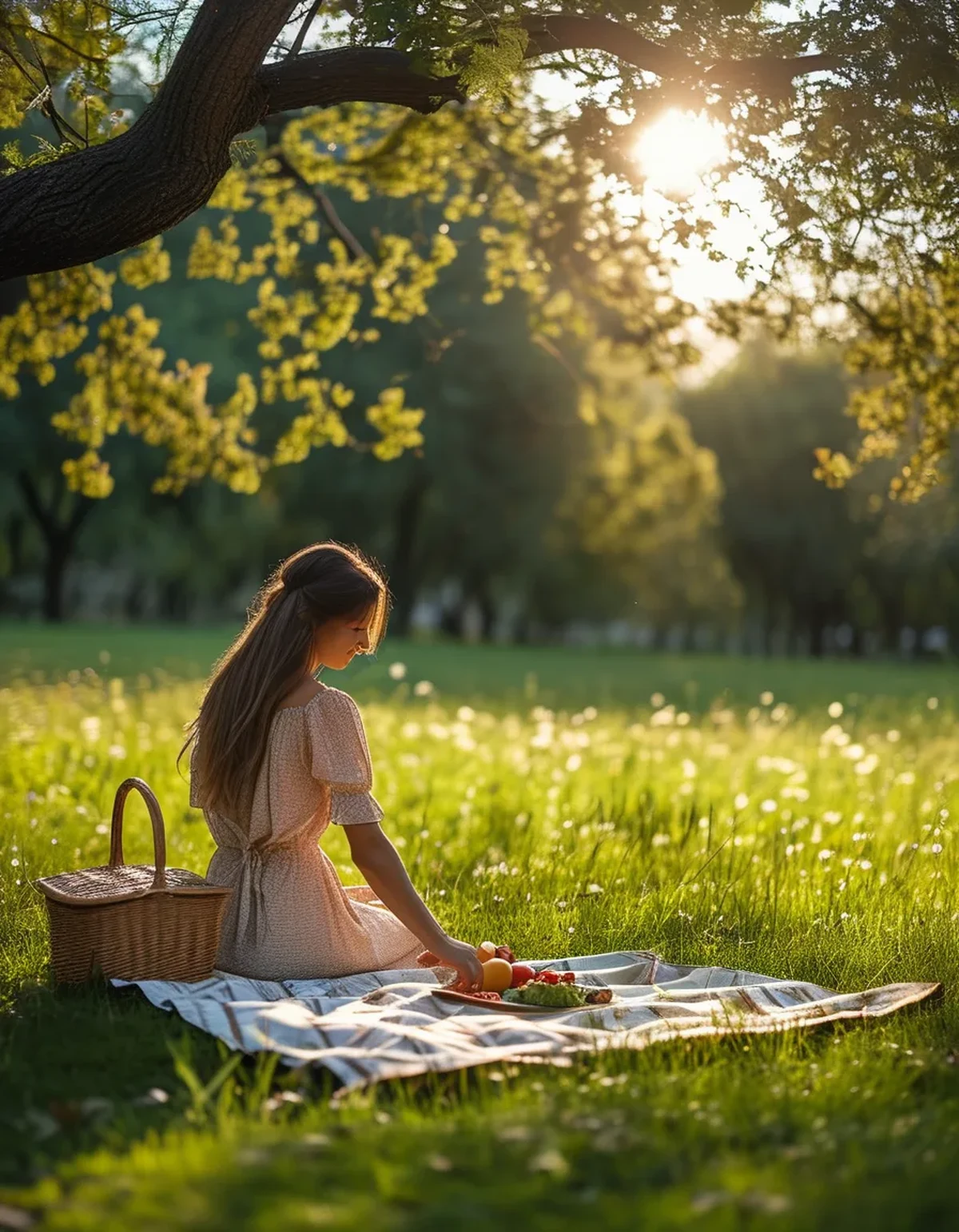
You choose the spot carefully. Big tree, good shade, blanket down, food out.
An hour and a half later half the blanket is in direct sun, the cheese has gone soft, and someone is squinting through the entire conversation.
This is not bad luck and it is not you misjudging the tree. It is geometry, and it changes measurably between June and September — which is exactly why the spot that worked all summer stops working now.
Why does shade move faster in late August than in June?
Because shadow length depends on the sun’s angle, and low-angle sun throws long shadows that sweep further for the same movement.
The sun moves at a constant rate — about 15 degrees per hour, every day of the year. What changes seasonally is how high it climbs.
At the summer solstice in the northern mid-latitudes the midday sun sits high overhead. Shadows are short and stubby, and an hour of sun movement shifts the shadow edge a modest distance.
By late August the midday sun has dropped roughly 10 to 12 degrees from its June peak, and it keeps falling about half a degree a day. Lower sun means longer shadows, and a longer shadow sweeps a bigger arc across the ground for the same 15 degrees of travel.
The practical effect: the same oak that held its shade over your blanket for two and a half hours in June holds it for a bit over an hour now. Nothing about the tree changed.
The afternoon is worse than the morning. As the sun drops toward the western horizon in the second half of the day, the rate of shadow movement accelerates. Between 3pm and 5pm the shade edge can travel further than it did between 11am and 1pm — which is why late-afternoon picnics get caught out most often.
Which direction does shade actually move, and how do you use it?
The sun travels east to west across the southern sky, so shadows sweep from west to east through the day.
That single fact is the whole trick.
- At midday, sit on the east side of your shade. The shadow will move toward you and past you through the afternoon, so you gain shade before you lose it.
- Sit on the west side and you are betting against the clock. The shadow walks away from you immediately and you spend the picnic chasing it.
A quick way to read a spot without thinking about compass directions: look at where the shadow edge sits now, then look at where the sun is. The shadow will move directly away from the sun. Put your blanket on the far side of that line from the sun, not the near side.
For a two-hour picnic starting at 1pm, allow roughly two to three metres of shade drift on a mid-height tree in late August, more if the tree is tall. A tall tree gives more shade but its shadow edge also moves faster, because the edge is further from the trunk.
A pergola, wall, or building is different. Solid vertical structures cast a hard edge that moves just as fast but is much easier to predict — the shadow is simply the shape of the object, stretched east.
Myth vs Fact: what people get wrong about picnic shade
Myth: A bigger tree means shade that lasts longer. Fact: A bigger tree means more shade at any given moment, but its shadow edge moves faster, not slower. Shade duration at a fixed point depends on the shadow’s width in the east-west direction, not on the tree’s total size. A wide, spreading tree beats a tall narrow one for staying put.
Myth: Dappled shade under a light canopy is nearly as good as solid shade. Fact: Broken canopy shade cuts direct sun substantially but still lets significant radiation through, and the gaps move constantly. For food temperature it is much better than nothing; for keeping a cool box cool, a solid shadow is worth seeking out.
Myth: Once the sun is past its peak, things get easier. Fact: Air temperature usually peaks somewhere between 3pm and 5pm, not at solar noon, because the ground keeps releasing heat it absorbed earlier. The sun is lower but the ground is hotter — which is why a late-afternoon picnic can feel warmer than a midday one even in the shade.
Myth: You can just move the blanket when the sun reaches you. Fact: You can, and you will, but by then your cool box has usually been sitting in direct sun for twenty minutes. Move the cool box first and separately — put it in the deepest shade you can find at the start and leave it there, even if that is a few metres from where everyone is sitting.

How do you pick a spot that lasts the whole picnic?
Spend two minutes on this and you will not move again.
1. Check the time and work out where the sun will be at the end. For every hour you plan to stay, the sun moves 15 degrees west. A three-hour picnic means the sun ends up 45 degrees further along than where it is now — a substantial swing.
2. Stand where you plan to sit and look up, not down. Ask whether there is canopy overhead to the west of you, since that is where the shade will come from later. Overhead canopy to the east is shade you have already used up.
3. Prefer shade that comes from something wide rather than tall. A run of hedge, a long building wall, or a broad low tree gives you a shadow with depth in the east-west direction, which buys you time.
4. Separate the food shade from the people shade. People will happily shuffle. A cool box sitting in sun for thirty minutes can gain several degrees, and once it warms it does not recover. Deep shade, lid closed, out of the walkway.
5. Watch for reflected heat. A light-coloured wall or a parked car nearby can throw significant reflected radiation into shaded ground. Shade next to pale concrete is meaningfully warmer than shade over grass.
6. If everything is open ground, bring your own. A basic beach umbrella or a light tarp gives you shade you can rotate — which is the only shade that does not run away from you.
Does moving shade actually matter for food safety?
It matters more than the temperature difference alone suggests, because it happens without anyone noticing.
Food safety guidance centres on the danger zone — roughly 40 to 140F (4 to 60C) — and on limiting how long perishable food sits inside it. In hot weather that window shortens considerably.
The specific risk with drifting shade is that the change is invisible. Nobody registers that the cool box moved into sun, because the cool box did not move; the shade did. It can sit in direct late-August sun for forty minutes before somebody notices it feels warm to the touch.
Direct sun on a closed cool box is significant. A dark-lidded box absorbs solar radiation and the interior gains heat steadily, particularly once the ice packs have already done part of their work.
Practical protections, in order of usefulness:
- Keep the box in the deepest available shade and check it once, halfway through.
- Throw a light-coloured towel over it. A pale cover reflects a large share of incoming radiation and costs nothing.
- Open it as few times as possible. Every opening dumps the cold air and it does not come back.
- Take out what you are eating now, close the lid, and leave the rest. Graze-from-the-box is the single fastest way to warm the contents.
This is general food-handling guidance, not a substitute for the food safety rules for anything you are unsure about — when in doubt with meat, dairy, or prepared salads that have been warm for a while, throw it out.
FAQ: Late Summer Picnic Shade Questions, Answered
How much does shade move in two hours in late August?
On a typical mid-height tree, expect the shade edge to travel roughly two to three metres in two hours around midday, and further in the late afternoon when the sun sits lower. Tall trees move their shadow edge further than short ones.
Is it better to picnic earlier or later in the day now?
Late morning to early afternoon is usually the more comfortable window in late summer, because air temperature peaks in the mid to late afternoon. Later picnics get lower, more angled sun that comes in sideways under trees rather than being blocked overhead.
Does shade keep food meaningfully cooler, or is it mostly comfort?
Both, and the food part is the one that matters. Shade removes direct solar radiation, which is the largest single heat input to a cool box on a sunny day. Keeping the box shaded and covered does considerably more for its contents than adding one more ice pack.
TL;DR:
- The sun moves 15 degrees an hour year-round, but in late August it sits 10 to 12 degrees lower than at midsummer — so shadows are longer and their edges sweep further in the same time.
- Sit on the east side of your shade at midday so the shadow moves toward you rather than away from you.
- Wide shade beats tall shade for staying put; a spreading tree or a long wall gives you more east-west depth to work with.
- Shade the cool box separately and cover it with something pale — the box getting caught in sun is the part nobody notices until it is warm.
None of this needs a compass or an app. Look at where the sun is, understand that the shadow will crawl away from it, and put yourself on the side it is heading toward. Two minutes at setup buys you a picnic where nobody has to move.
Keep Reading
This article is for general informational purposes only and is not medical advice. Always consult a qualified health professional for guidance specific to you.