How to Keep Bugs Off Your Picnic Without Chemical Spray
Quick Answer: Location and food covering do more work than any spray — picnicking away from flowering plants and standing water, and keeping food under mesh covers or in sealed containers between bites, prevents most bug problems before they start.
You’ve sprayed the whole blanket area with bug spray before and still ended up sharing your sandwich with three ants and a very determined bee. The spray was solving the wrong problem.

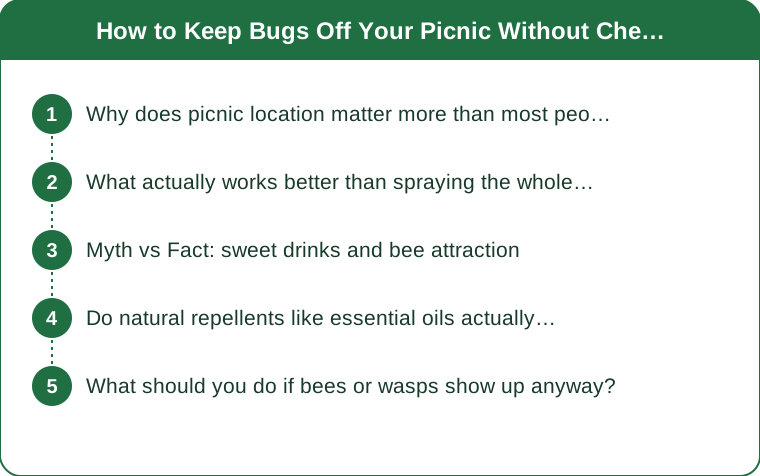
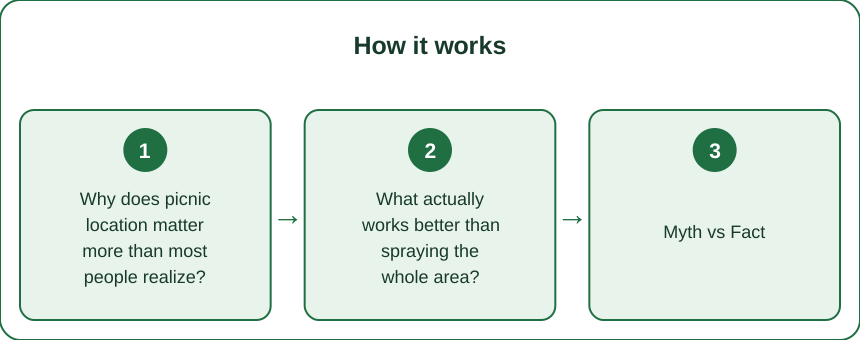
Why does picnic location matter more than most people realize?
Bees and wasps are drawn to flowering plants, and ants travel established scent trails from nearby nests — setting up even 10-15 feet away from flower beds or visible ant activity dramatically cuts down encounters before you’ve done anything else. Standing water nearby also attracts more flying insects generally.
A spot on open grass or a paved area, away from garden beds and puddles, does more passive prevention than any spray applied after the fact.
What actually works better than spraying the whole area?
Covering food between servings — mesh food domes, resealable containers, or even a light cloth over serving dishes — removes the smell signal that draws bugs in the first place. Bugs largely find food by scent; once food is sealed, most insects lose interest and move on.
This matters more than spraying because a chemical repellent sprayed near food isn’t something most people want their actual meal exposed to anyway.

Myth vs Fact: sweet drinks and bee attraction
Myth: all bugs are drawn equally to any food. Fact: bees and wasps are specifically drawn to sugary drinks and ripe fruit, far more than to savory food — using cups with lids and straws for sweet drinks cuts bee encounters noticeably without needing any spray.
Myth: citronella candles work as well as people assume. Fact: citronella has modest, short-range effectiveness at best and works mainly on mosquitoes, not the ants and bees that are the bigger daytime picnic nuisance — it’s not the broad solution it’s often marketed as.
Do natural repellents like essential oils actually help?
Peppermint, eucalyptus, and citronella oils have some evidence of mild ant and mosquitoderrent effect, mainly by disrupting the scent trails ants use to navigate, but the effect is modest and short-lived compared to sealed food storage. They’re a reasonable supplementary step, not a primary strategy.
A few drops on the picnic blanket corners can help marginally, but shouldn’t replace the more effective steps of location and food covering.
What should you do if bees or wasps show up anyway?
Stay calm and avoid swatting, which tends to escalate defensive behavior — moving slowly away from the food source or covering it usually resolves the situation faster than active shooing. If a wasp nest is nearby (visible or suspected), relocating the picnic entirely is safer than trying to coexist near it.
This is general prevention guidance, not medical advice — anyone with a known bee or wasp allergy should carry appropriate medication regardless of these precautions.
TL;DR:
- Pick a spot away from flowering plants, ant trails, and standing water before anything else
- Cover food between servings — scent, not proximity, is what draws most bugs in
- Use lidded cups for sweet drinks specifically, since bees target sugar more than savory food
- Treat essential oils as a minor supplement, not a primary defense
Bug-proofing a picnic is mostly about prevention through setup, not reaction through spraying — get the location and covering right and most problems never start.
Keep Reading
This article is for general informational purposes only and is not medical advice. Always consult a qualified health professional for guidance specific to you.