Picnic Food Safety: Keeping the Spread Delicious Instead of Dangerous
Quick Answer: Bacteria multiply fastest between 40°F and 140°F (4-60°C), so perishable picnic food is safe for about two hours out of the cooler — one hour above 90°F (32°C). Pre-chill the cooler, pack only fridge-cold food, keep drinks in a separate cooler so the food one stays shut, and serve in small waves instead of putting everything out at once.
The picnic’s only real villain is invisible, silent, and doing arithmetic in your potato salad.
Every summer “we all felt terrible that evening” story traces back to the same handful of mistakes — and none of them is exotic. It’s almost always a bowl left in the sun for three hours.
The good news: three habits cover nearly all of it, and none requires you to become the person who ruins picnics.
What Is the Food Danger Zone?
40°F to 140°F (4°C to 60°C) — the temperature band where bacteria multiply fastest. At summer temperatures, populations can double in as little as 20 minutes.
A picnic is, structurally, a danger-zone event. Everything you do is about limiting time in that band.
The two-hour rule: perishable food is generally considered safe for up to two hours at room temperature. Above 90°F (32°C), that drops to one hour. Crucially, the clock starts when food leaves the cooler, not when it leaves your fridge — and it’s cumulative across the day.
The risk tiers, honestly:
Higher risk — mayo-based salads that have gone warm, undercooked or reheated meats, dairy and egg dishes, cut melon and other cut fruit left out, cooked rice and pasta at room temperature.
Lower risk — breads, whole uncut fruit, hard cheeses, cured meats, vinegar-dressed salads, hummus and raw vegetables, most baked goods.
Cross-contamination: if you’re bringing raw meat to grill, it travels sealed and separate — ideally in its own cooler. Separate plates and tongs for raw and cooked, no exceptions, no “it’s probably fine.”
Vulnerable eaters — anyone pregnant, very young, elderly, or immunocompromised — deserve the strict version of every rule here. Scale your caution to the table.
How Do You Pack a Cooler Properly?
Pre-chill everything. A cooler maintains temperature; it does not create it. Chill the cooler itself (an ice pack overnight, or 20 minutes with a bag of ice you then discard), and only pack food that’s already fridge-cold.
Use frozen water bottles as ice packs. They keep things cold, they don’t leave a pool of meltwater in the bottom, and by mid-afternoon they’re drinking water.
Fill it completely. A full cooler holds cold far longer than a half-empty one. Fill gaps with extra ice, or with a rolled towel.
Pack in reverse order of need — the last thing you’ll want goes at the bottom.
Run a separate drinks cooler. This is the single most underrated tip here. Drinks get opened twenty times an afternoon; every opening dumps cold air. Isolate them and your food cooler might get opened three times all day.
Transport it in the cabin, not the trunk. A car trunk in summer can reach well over 120°F. On arrival, park the cooler in deep shade and throw a light blanket or towel over it — shade versus sun is worth literal hours of safety margin.
Optional but cheap: a small fridge thermometer inside, so you can verify you’re holding below 40°F on long days.
For hot food: a good thermos or insulated carrier keeps soup or chili genuinely hot. Hot stays hot, or it converts to the room-temperature-safe menu. There’s no middle option.
What Foods Survive a Picnic Best?
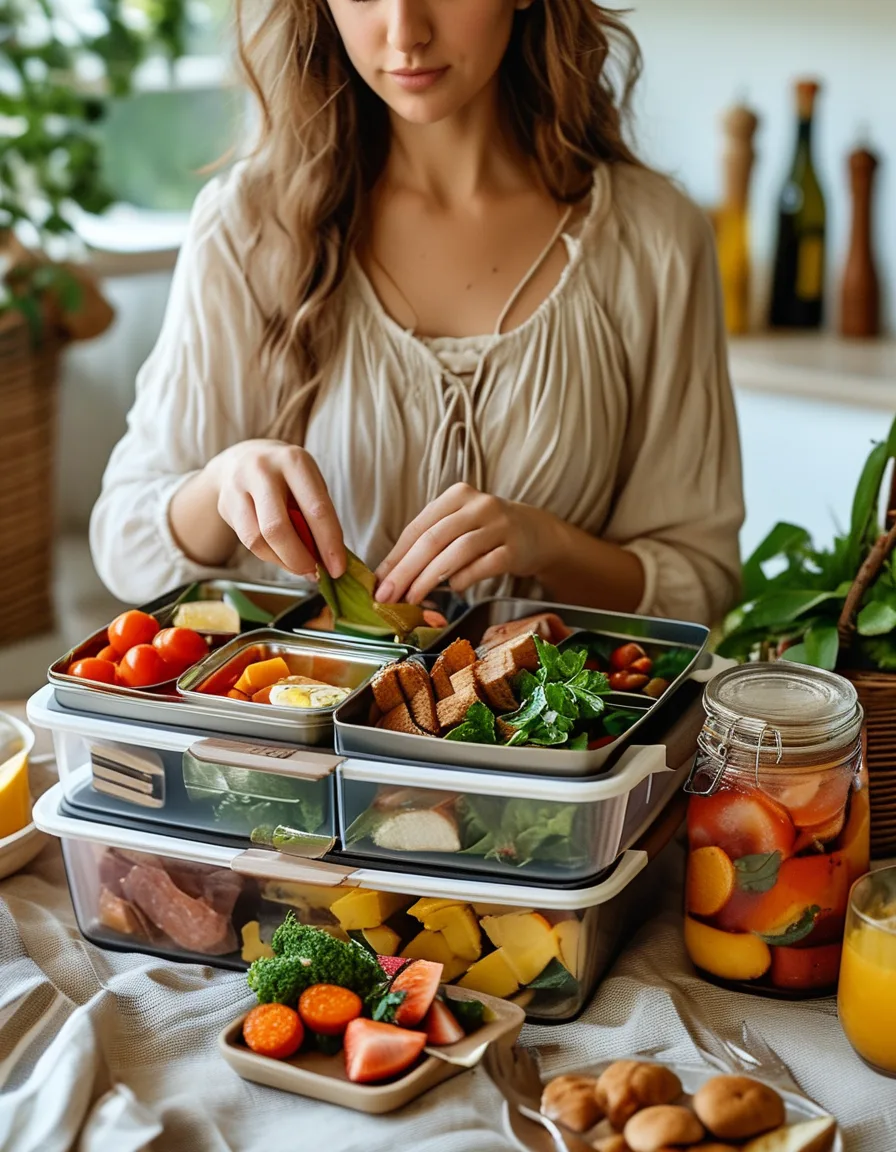
The champions — these are close to bulletproof:
- Vinegar-dressed slaws and pasta salads (the acid works in your favour)
- Hard cheeses and cured meats
- Hummus, dips with an acidic base, and raw vegetables
- Whole uncut fruit
- Breads, crackers, and most baked goods
- A frittata, served within its window
The modified classics — fine with attention:
- Mayo-based salads. Commercial mayonnaise is acidic and actually fairly stable; the real problem is the warm hours plus the chicken or potato it’s mixed with. Keep them genuinely cold and they’re fine.
- Sandwiches, packed cold with wet ingredients (tomato, pickles, dressing) separate — better for sogginess and safety.
The caution tier — only with a serious cold chain: sushi, rare meats, cream-filled desserts, anything with raw egg.
Serve in waves. Put out half a bowl and keep the rest on ice. When it runs low, bring out a fresh bowl — don’t top up the old one, because topping up resets nothing and warms everything.
Leftovers: anything perishable that’s been out past its two-hour window goes in the bin without negotiation. When in doubt, throw it out. Slightly over-catering and composting the excess is very cheap insurance.
Hand hygiene: a bottle of sanitizer and a pack of wipes, plus a serve-with-utensils culture. Park hands are park hands.
Myth vs Fact: Picnic Food
Myth: “Mayonnaise is what makes picnic food dangerous.” Fact: Commercial mayo is acidic and relatively stable. The risk comes from the chicken, egg, or potato it’s mixed with, held warm for hours.
Myth: “If it smells fine, it’s fine.” Fact: The bacteria that cause foodborne illness generally don’t change how food smells, looks, or tastes. Your nose is not a sensor for this.
Myth: “Re-chilling food that got warm makes it safe again.” Fact: Cooling slows further growth but doesn’t undo it, and some bacteria leave behind toxins that chilling doesn’t touch. The clock doesn’t reset.
Myth: “A cooler with ice keeps food cold all day regardless.” Fact: Only if it started cold, stayed full, sat in shade, and wasn’t opened constantly. A warm cooler opened every ten minutes in direct sun is just a box.
Myth: “Kids can eat anything, they’re tough.” Fact: Young children are among the higher-risk groups. Give them the low-risk grazing tier — whole fruit, crackers, hard cheese — that needs no clock at all.
Mini FAQ
How long does food really last in a cooler?
A pre-chilled, well-packed, full cooler kept in shade and opened rarely can hold below 40°F for most of a day. The same cooler opened constantly in direct sun may lose it in two or three hours. Behaviour matters more than the cooler’s price tag.
What about potlucks where other people bring dishes?
Have the cold-chain conversation in advance and phrase it kindly — “bring it cold and I’ll have cooler space ready.” Assume anything that arrives at ambient temperature has already started its clock.
Do I need to worry as much on a cool spring day?
Less, but the two-hour rule still applies at any room-ish temperature. Spring and autumn are forgiving; a heat wave is a menu-changer, and on the hottest days you lean entirely on the champions list.
TL;DR:
- The danger zone is 40-140°F. Perishables get two hours out of the cooler — one hour above 90°F.
- Pre-chill the cooler, pack only fridge-cold food, and fill it completely.
- Separate drinks cooler so the food cooler stays shut. Transport in the cabin, store in shade.
- Lean on vinegar-dressed dishes, hard cheeses, whole fruit, and breads on hot days.
- Serve in small waves, never top up an old bowl, and bin anything past its window without sentiment.
Keep Reading
This article is for general informational purposes only and is not medical advice. Always consult a qualified health professional for guidance specific to you.