Which Salads Survive a Picnic Cooler, and Which Collapse
Quick Answer: Salads collapse in transit for one main reason: salt and acid in dressing pull water out of delicate cells by osmosis, so tender leaves drown in their own juices. The survivors are salads built from ingredients that have no water to lose or that improve by absorbing — grains, beans, pasta, and sturdy shredded vegetables — where hours of marinating time is a feature, not a countdown. Build the menu around marinators, keep the one leafy salad undressed until the blanket, and the cooler becomes an asset instead of a threat.
With late-summer produce at its absolute peak, this is the fortnight to get the packing order right. Here is the science, the rankings, and the assembly method.
What actually makes a salad collapse in the cooler?
Osmosis, mostly — with two accomplices.
A lettuce leaf is crisp because its cells are inflated with water like tiny balloons. The moment dressing lands, the salt and acid on the surface create a concentration gradient, and water rushes out of the cells to dilute it. The balloons deflate — that is wilting, and it is not reversible. Delicate leaves have thin walls and enormous surface area, so the process runs to completion in under an hour. The puddle at the bottom of the container is literally the salad’s internal water, extracted by its own dressing.
Accomplice one is mechanical damage. Cut edges leak; bruised leaves from an over-packed container leak faster. A salad tossed at home, compressed into a tub, and driven forty bumpy minutes has been squeezed like a sponge before the cooler even matters.
Accomplice two is condensation. A cold container in an August cooler collects moisture, and water sitting on leaves accelerates softening and dilutes flavor. This is why paper towel liners earn their place.
Notice what is missing from the failure list: temperature itself. Cold is not the enemy — cold is preservation. Every collapse mechanism is about water moving where you did not want it, which means every fix is about controlling when salt, acid, and pressure meet the vulnerable ingredients.
Which salads actually improve with hours in a cooler?
The marinators — salads whose ingredients absorb dressing instead of being wrecked by it.
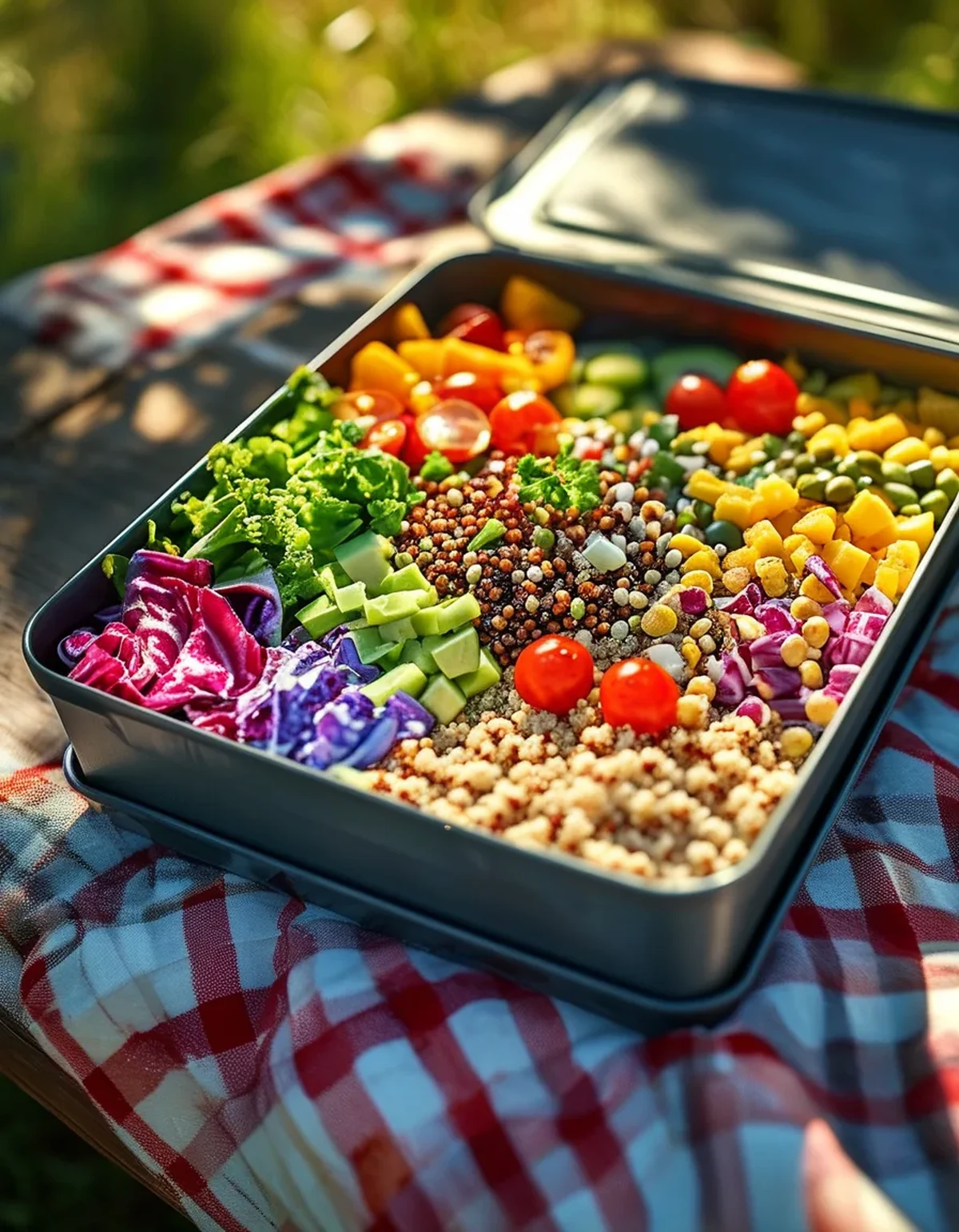
Grain salads lead the category. Farro, quinoa, rice, and couscous soak up vinaigrette over hours, growing more flavorful while their texture holds completely. A grain salad dressed at 9pm is better at noon than it ever was fresh — the picnic timeline is its ideal timeline.
Bean salads are equally bulletproof. Chickpeas, black beans, and white beans have sturdy skins and dense interiors; a marinated three-bean salad is a classic precisely because it was engineered, generations ago, for exactly this job.
Slaws built on vinegar sit in the improve column too. Cabbage is so structurally tough that salting and dressing merely relax it from raw crunch to pleasant crispness — a vinegar slaw hits its stride around hour two. (Creamy slaws travel nearly as well texture-wise; just keep them properly cold.)
Marinated vegetables — cucumbers in rice vinegar, tomatoes in oil and salt, grilled zucchini in lemon — are deliberate, controlled wilting. You are running the collapse chemistry on purpose, toward pickle-adjacent territory.
Pasta salad carries one asterisk: it survives beautifully, but chilled pasta firms and absorbs dressing, so slightly overcook the pasta and pack extra dressing to refresh at the site.
The pattern across all of them: low-water, high-absorbency ingredients, where time with the dressing is deepening flavor rather than draining cells.
How do you build and pack the one leafy salad worth bringing?
Separation and layering — the entire method in two words.
Choose leaves with structure. Romaine hearts, little gem, kale, and cabbage blends have thick walls and ribs that buy hours; spring mix, butter lettuce, and baby spinach are done forty minutes after dressing touches them. Kale is the special case: massage it with a little oil and salt at home and it, like a slaw, actually improves in transit.
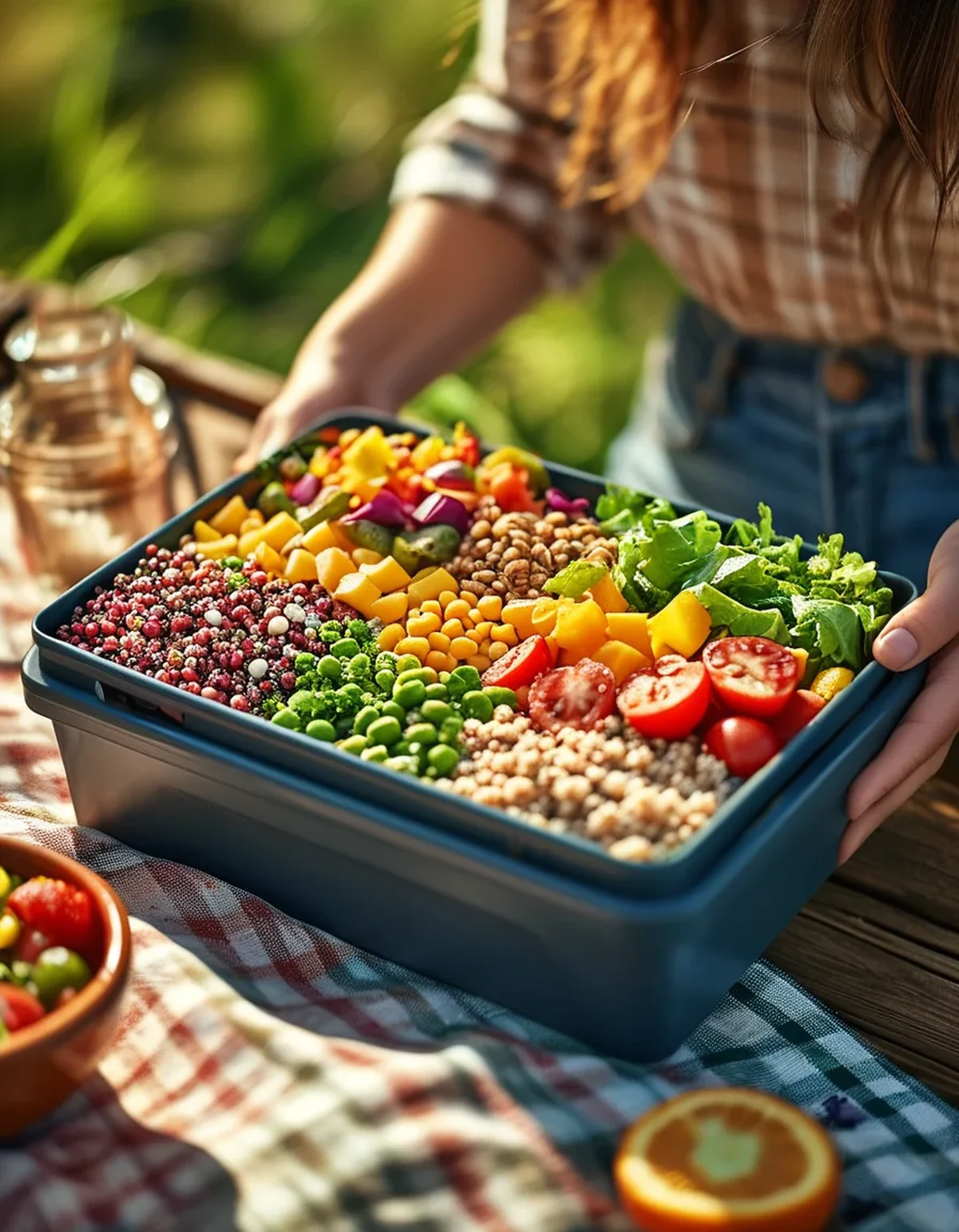
Dress at the destination, full stop. Carry dressing in a small jar — shaking it on the blanket is a thirty-second job that saves the entire salad. If you want zero site assembly, layer instead: dressing on the container floor, sturdy vegetables (cucumbers, peppers, carrots) sitting in it, grains or beans next as a barrier, leaves on top touching nothing wet. Tip and toss when you arrive — the classic jar-salad architecture, and it works in any tall container.
Add crunch last of all. Nuts, seeds, croutons, and crispy onions ride in a separate small bag at the top of the cooler; they are the ingredients with the least tolerance for humidity and the most impact when they land crisp.
Line and vent against condensation. A paper towel under and over the leaves absorbs the cooler sweat, and cracking the container lid for the last shaded twenty minutes before serving lets the chill soften without the moisture settling.
One leafy showpiece assembled this way, surrounded by two or three marinators, is the highest-success picnic spread there is — and only one dish of the four is on a timer.
Five Picnic Salad Mistakes That Ruin Good Ingredients
Cutting tomatoes at home. Cut tomatoes weep juice into everything they touch and go mealy in the cold. Bring cherry tomatoes whole, or slice large ones at the site — five seconds of knife work for a completely different salad.
Adding avocado before transit. Browning plus bruising makes avocado the worst traveler in the category. Bring it whole with a lime; cube and add on the blanket.
Letting cheese ride warm-ish at the top of the cooler. Soft cheeses sweat and toughen through temperature swings. Pack feta and mozzarella low, near the ice, in their brine or liquid where possible — and cube rather than crumble, since less surface area survives better.
Treating mayo as the safety problem and forgetting the clock entirely. Commercial mayo is acidified and more stable than its reputation — the real rule applies to everything: perishable food gets about two hours total above fridge temperature, and just one hour once it is genuinely hot out, which an August picnic usually is. Keep serving portions small and the mothership in the cooler.
Dressing everything at home to save blanket effort. The thirty seconds saved costs the texture of every delicate thing in the box. The marinators get dressed early because it helps them; the rule never transfers to leaves. Two dressings, two timelines — that is the whole discipline.
FAQ: Picnic Salads, Answered
What is the single best-surviving salad if I can only bring one?
A grain salad with beans, sturdy vegetables, and a lemon-forward vinaigrette — dressed the night before, finished with herbs and crunch at the site. It covers the role of side and main, improves in transit, and shrugs off a three-hour cooler ride.
How do I keep herbs from turning black and slimy?
Hardy herbs (parsley, mint stems removed) tolerate mixing-in; tender ones (basil especially) bruise and blacken — tear basil onto the salad at the very end, at the site. Whole herb leaves scattered on top also survive far better than chopped.
Is there a way to rescue a salad that arrived wilted?
Partially. Drain the pooled liquid, add the reserved crunch element and a fresh squeeze of acid, and re-toss — brightness and texture contrast mask softness well. True crispness cannot be restored, so the fix is contrast, not resurrection.
Do the same rules apply to fruit salad?
Same chemistry, different trigger — sugar pulls water just like salt does. Mix sturdy fruit (grapes, melon, berries) ahead, but hold soft fruit (banana, peach) and any citrus-sugar dressing until serving. Cold fruit salad in the bottom of the cooler is otherwise one of the best travelers there is.
TL;DR:
- Collapse is osmosis: salt and acid pull water out of delicate cells — so the dressing decides the timeline, not the miles.
- Marinators (grain, bean, pasta, slaw, marinated vegetables) improve for hours; leafy salads get dressed only at the blanket.
- Layer wet-to-dry with leaves on top, pack crunch separately, and add tomatoes, avocado, and basil at the site.
- Two hours above fridge temperature is the outer limit for perishables — one hour in real August heat.
Build your next picnic as three marinators made tonight plus one romaine showpiece assembled on the grass. It is less work at the worst time, more flavor at the best, and nothing on the table will have collapsed.
Keep Reading
This article is for general informational purposes only and is not medical advice. Always consult a qualified health professional for guidance specific to you.