Why a Cooler Packed the Night Before Outperforms One Packed That Morning
Quick Answer: A cooler packed the night before performs better because the cooler’s own walls and the food inside have already given up their heat. When you pack a room-temperature cooler with room-temperature food in the morning, a large share of your ice is consumed just bringing that mass down to temperature — often within the first two hours. Pre-chilling the cooler and the contents means nearly all the ice is available for the actual job of resisting outside heat.
This is the single biggest variable in cooler performance, and it costs nothing but planning.
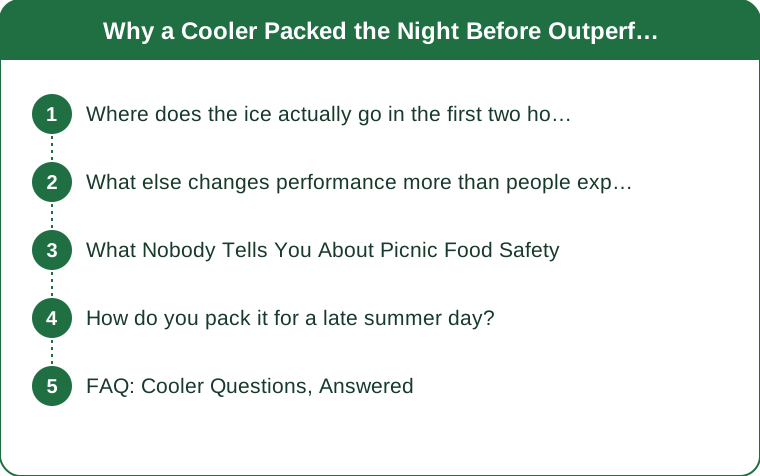
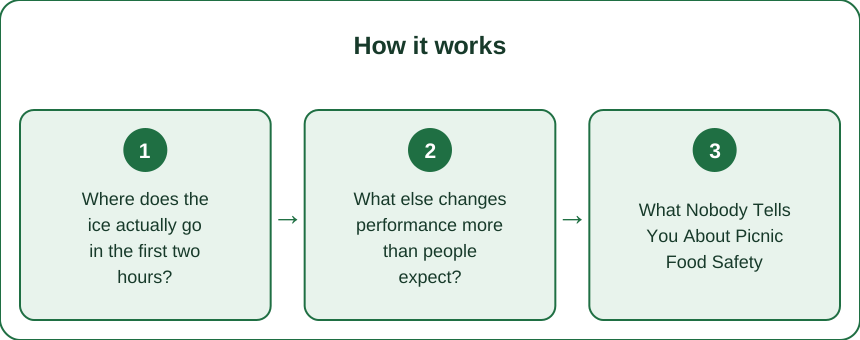
Where does the ice actually go in the first two hours?
Into the cooler itself, mostly.
A plastic cooler has substantial thermal mass in its walls and lid. At room temperature, all of that mass has to be cooled down before the interior can hold a stable low temperature. The energy for that comes from your ice, and it is not a small amount.
The food is the second draw. A room-temperature container of pasta salad, a bag of sandwiches, and a few drinks together represent a considerable amount of heat that has to be removed before anything reaches a safe holding temperature.
The combined effect is that a significant share of the ice in a morning-packed cooler is consumed in the first couple of hours doing setup work rather than maintenance work. You arrive at the picnic with a cooler that is barely at temperature and already low on ice.
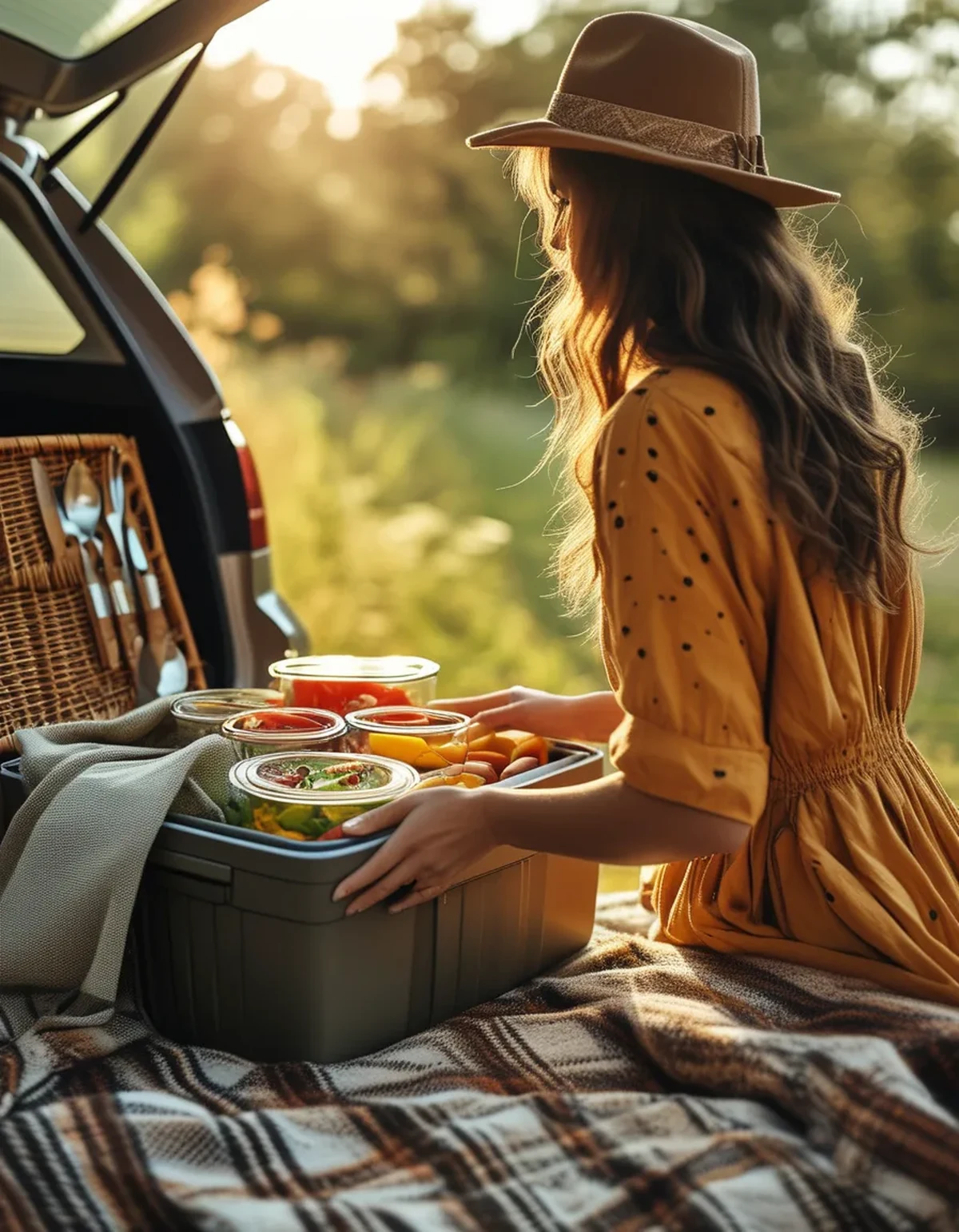
Pre-chilling changes the arithmetic completely. A cooler that sat overnight with a sacrificial bag of ice, emptied and repacked in the morning, starts cold. Food chilled in the refrigerator overnight starts cold. Now the ice you pack has only one job, which is resisting heat coming in from outside.
The practical difference is commonly several hours of additional safe holding time from identical materials.
What else changes performance more than people expect?
Four things, all of them free.
Fill level. A full cooler holds temperature far better than a half-empty one, because air has almost no thermal mass and warms instantly every time you open the lid. Fill gaps with extra ice, towels, or crumpled newspaper.
Block versus cubed ice. Block ice melts far more slowly because it has much less surface area per unit mass. Cubes cool faster initially, which is useful. The best combination is block ice on the bottom with cubes filling gaps around the food.
Opening frequency. Every opening exchanges the cold air inside for warm air outside. Two coolers — one for drinks, which gets opened constantly, and one for food, which gets opened twice — dramatically outperforms a single cooler for both.
Where it sits. A cooler in direct sun on a hot surface absorbs heat continuously through its base and lid. In shade, on grass, with a light-colored towel over the lid, it can hold hours longer. A cooler in a car boot on a warm afternoon is in one of the hottest environments available.
The cumulative effect of these is larger than upgrading to an expensive cooler while doing none of them.
What Nobody Tells You About Picnic Food Safety
The danger zone starts at 40 degrees Fahrenheit, not at the point food feels warm. Food can be well into unsafe territory while still feeling cool to the touch. A cheap fridge thermometer in the cooler removes the guesswork entirely.
Two hours is the outdoor limit, and one hour above 90 degrees. That is total accumulated time out of the cooler, not per serving. Food that comes out for lunch, goes back, and comes out again for seconds is accumulating time across both.
Melted ice water is not a problem — draining it is. Ice water is still at the freezing point and continues to cool effectively. Draining it removes cold mass and lets warm air in. Leave it unless the food is in danger of getting wet, which is what sealed containers are for.
Frozen drinks are the most efficient ice you can pack. Water bottles or juice boxes frozen solid act as ice for hours and become drinkable as they thaw, which means no wasted volume and no meltwater.
The lid seal matters more than the wall thickness on most consumer coolers. A warped or poorly seated lid loses more cold than thin walls do. Checking that the lid closes flush is a five-second check that many people never make.
How do you pack it for a late summer day?
In layers, coldest at the bottom, in the order you will need things.
Bottom layer: block ice or frozen bottles, spread evenly. This is your reservoir and it should not be disturbed.
Second layer: anything raw or high-risk — meats, dairy-based dishes, anything with mayonnaise or eggs. These sit closest to the coldest point and should be in sealed rigid containers so meltwater cannot reach them.
Third layer: prepared foods, cheeses, and anything you want cold but which tolerates a slightly higher temperature.
Top layer: fruit, drinks you will reach for, and anything that gets used first. Putting frequently accessed items at the top means less digging, which means less time with the lid open.
Fill every gap with cubed ice, then lay a folded towel over the top before closing. The towel acts as an insulating layer at the point where warm air enters most readily.
In late summer specifically, plan for afternoon heat rather than morning conditions. A cooler that is adequate at 10am is often overwhelmed by 3pm, because ambient temperature has risen and the cooler has been opened a dozen times. Packing about a third more ice than seems necessary is the standard correction, and it is the correction most people skip.
This is general guidance. Follow local food safety recommendations, and when in doubt about how long something has been out, discard it.
FAQ: Cooler Questions, Answered
How much ice do I actually need?
The common guideline is a two-to-one ratio of ice to contents by volume for a full day in warm weather. Most people pack far less than that and are surprised when the cooler fails by mid-afternoon.
Do reusable ice packs work as well as ice?
They hold temperature well and stay dry, which is a real advantage, but they generally have less total cooling capacity than the equivalent volume of ice. A mix of both works best — packs against the food, ice filling the gaps.
Should I pre-chill even a high-end cooler?
Especially a high-end cooler. Thick insulated walls have more thermal mass, so an unchilled premium cooler consumes even more ice on setup than a cheap one. Pre-chilling is where most of its advantage actually comes from.
TL;DR:
- A room-temperature cooler and room-temperature food consume much of your ice in the first two hours.
- Pre-chill the cooler overnight and refrigerate the food, so all the ice does maintenance rather than setup.
- Fill every gap, use block ice at the bottom with cubes around, and run separate drink and food coolers.
- Keep it shaded and off hot surfaces, and pack about a third more ice than you think you need.
Try pre-chilling before your next outing and note when the ice runs out. The difference is usually large enough to be obvious without measuring anything.
Keep Reading
This article is for general informational purposes only and is not medical advice. Always consult a qualified health professional for guidance specific to you.