Why One Hot Item Rescues an Autumn Picnic and Warm Clothes Do Not
Quick Answer: Clothing slows heat loss but does not add heat. Sitting still outdoors means minimal muscle-generated warmth, so over 60 to 90 minutes you cool from the core outward regardless of layers. A hot drink or hot food adds heat directly and also triggers a warming sensation out of proportion to its actual calories, which is why one thermos transforms an autumn picnic more than an extra jacket does.
You brought the blanket, the extra layer, and the hat.
Forty minutes in, everyone is cold anyway and starting to talk about leaving.
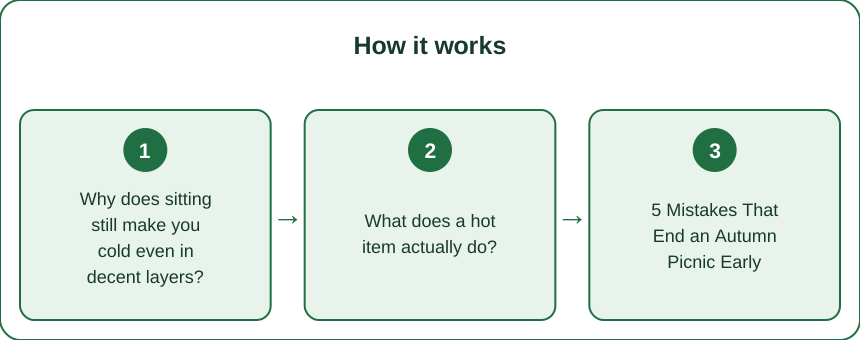
Why does sitting still make you cold even in decent layers?
Because you have removed your main heat source and layers only conserve.
Muscle activity produces most of your warmth. Walking, moving, even fidgeting generates heat continuously. Sitting on a blanket removes almost all of it, so your production drops to close to resting levels.
Insulation slows loss, it does not create heat. A jacket keeps warmth in. If you are producing very little, there is progressively less to keep in, and the layers simply extend how long the decline takes.
The ground conducts heat away faster than air does. Sitting on cool, often damp autumn ground pulls heat through direct contact, which is a far more efficient transfer than air. This is why sitting feels dramatically colder than standing at the same temperature.
Digestion is a modest heat source and a cold meal contributes nothing. Eating cold food outdoors means your body spends energy warming it, which is a small net loss at exactly the wrong moment.
The decline is gradual, which is why it catches everyone out. You feel fine for the first twenty minutes. The problem shows up at forty and by sixty it is decisive.
What does a hot item actually do?
Two separate things, and the second is bigger than the physics suggests.
It adds heat directly. A hot drink or hot food transfers real thermal energy into your core. It is a modest amount in absolute terms, but it arrives at the core rather than the surface, which is where it counts.
It triggers a warming response out of proportion to the energy. Temperature receptors in the mouth and throat register the heat immediately and produce a strong sensation of warmth. Comfort is largely about perception, and this is why a hot drink feels so disproportionately effective.
It usually comes with a pause and a shared moment. Pouring from a thermos creates a small ritual, and people report the break itself as warming — hands wrapped around a cup is genuinely effective at rewarming the extremities that got cold first.
Hands and face are where cold registers most. Warming a mug with your hands addresses the exact site where you are most aware of being cold, which changes the subjective experience more than warming your torso does.
It extends the picnic by an hour or more. This is the practical outcome. The autumn picnic that ends early ends because people got cold, and one thermos routinely turns a 45-minute outing into a two-hour one.
5 Mistakes That End an Autumn Picnic Early
1. Bringing only cold food because that is what a picnic is. Summer picnic logic applied to a 55-degree day. Sandwiches and salad are fine as the base; they just need something hot alongside.
2. Sitting directly on a thin blanket. A single layer of fabric does almost nothing against ground conduction, and it gets damp within minutes. A waterproof-backed mat or a folded second blanket underneath addresses more than any clothing choice.
3. Choosing the pretty shaded spot. Autumn sun is genuinely warming and shade is genuinely cold — the difference in perceived temperature between sun and shade is far larger in October than in July. Pick sun and accept the slightly worse photo.
4. Underestimating how fast it drops after 4pm. In autumn, temperature falls steeply once the sun gets low, often 10 degrees in the hour around sunset. A picnic that started comfortably at 3pm is a different event at 5pm.
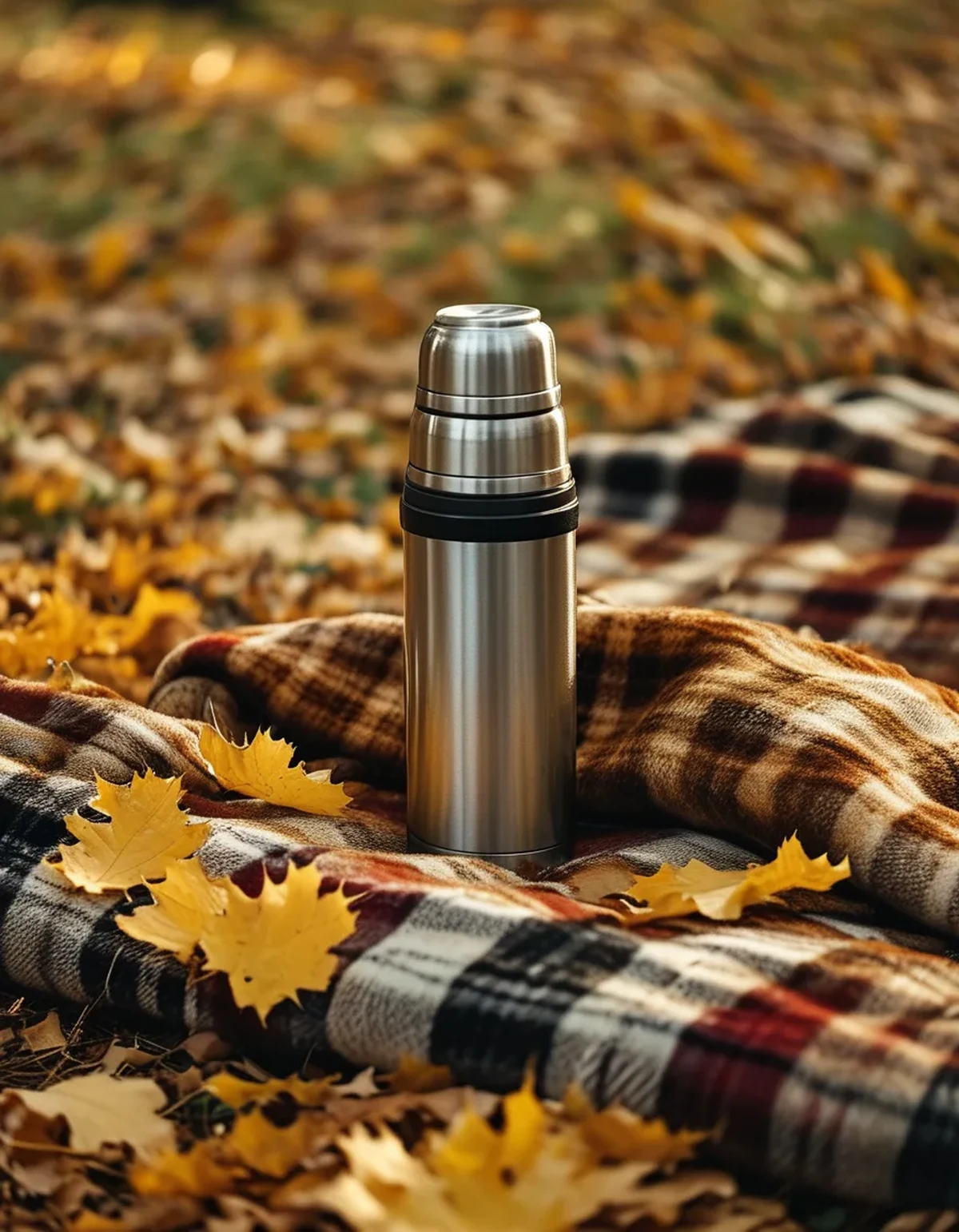
5. Forgetting hot drinks need a real thermos. A cheap flask loses most of its heat within an hour. If the drink is the plan, the container is the equipment that matters, and it is worth testing at home before you rely on it.
What should you actually pack?
A short list, and the first two items do most of the work.
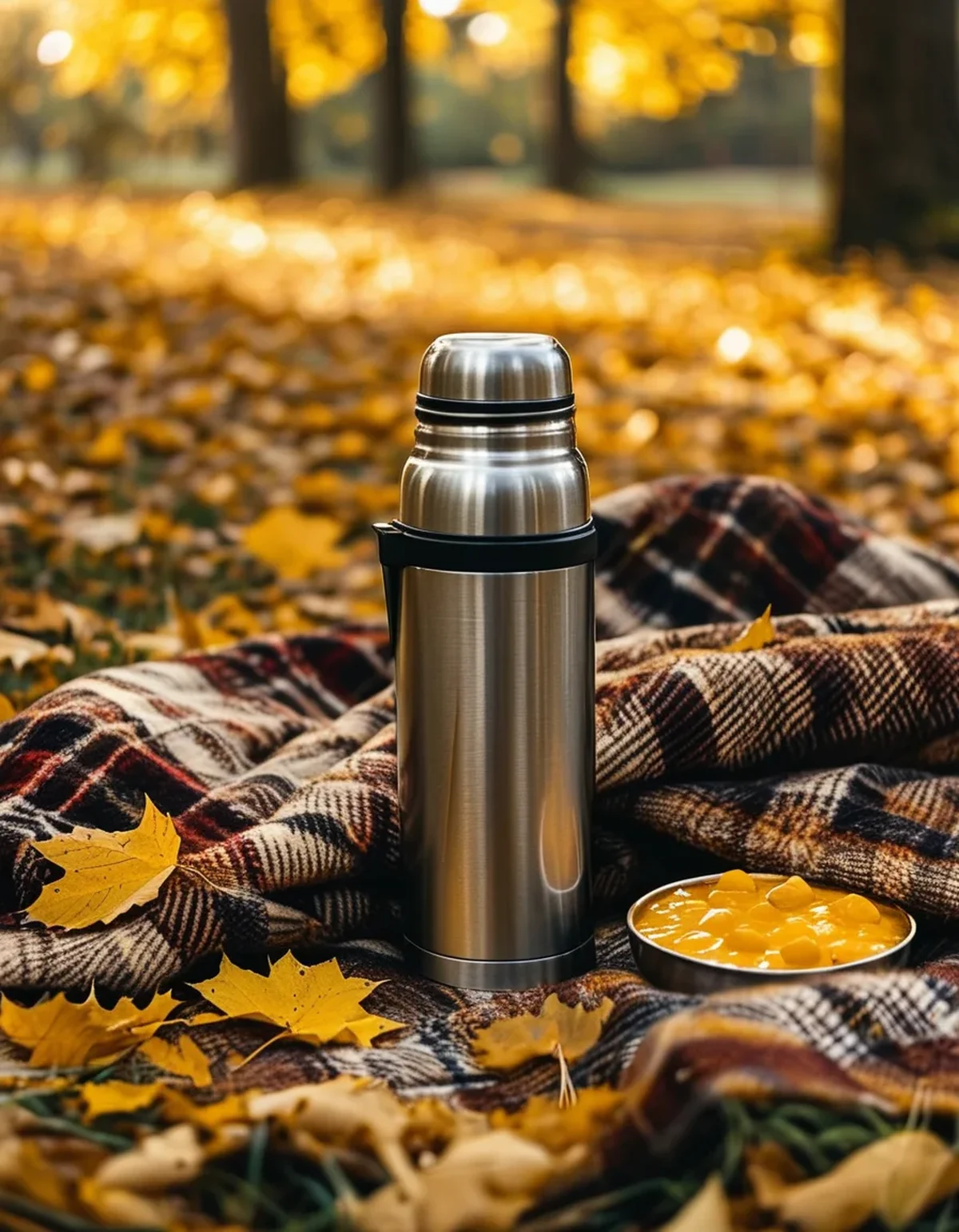
A good thermos of something hot. Tea, coffee, hot chocolate, or soup. Preheat it with boiling water for two minutes before filling — this single step adds a substantial amount of retained heat and almost nobody does it.
A waterproof ground layer. Under the blanket, not instead of it. This solves the conduction problem that no amount of clothing addresses.
One hot food item if you can manage it. Soup in a wide-mouth thermos, baked potatoes wrapped in foil and towel, or hot sausages in an insulated container. A wide-mouth thermos is a genuinely useful piece of equipment for exactly this window of the year.
A second blanket for laps. Sitting means your legs are still and lower than your torso, so they cool first. A lap blanket does more per ounce than a heavier coat.
Timing over gear. A picnic from 12 to 2pm in October is a fundamentally different experience from 4 to 6pm. Choosing the warmer window costs nothing and beats every packing decision on this list.
FAQ: Autumn Picnics, Answered
How cold is too cold for a picnic?
With sun, a hot drink, and a proper ground layer, most people are comfortable down to the mid-40s for an hour or two. Without those three, 60 degrees in shade can be unpleasant within half an hour. The variables matter more than the number.
Does a hot drink actually raise body temperature or just feel like it?
Both, though the felt effect is larger than the measurable one. The thermal energy in a cup is real but modest; the sensory response is immediate and strong. For the purpose of enjoying an afternoon outdoors, the perception is what you are optimizing for.
What about food safety in cooler weather?
Cool weather extends the safe window for cold foods, which is one genuine advantage of autumn. Hot foods are the ones to watch — hot food held at lukewarm temperature for hours is the risk case, so either keep it genuinely hot in a good thermos or eat it in the first hour.
TL;DR:
- Sitting still removes your main heat source; layers only slow the loss, they do not add warmth
- A hot drink adds core heat and produces a warming sensation far larger than its actual energy
- Ground conduction is the biggest hidden drain — a waterproof layer under the blanket fixes it
- Preheat your thermos with boiling water, choose sun over shade, and bring a lap blanket
- An earlier time slot beats every gear decision; the drop after 4pm in autumn is steep
The mistake is treating an autumn picnic as a summer picnic with more clothes. It is a different event with a different physics problem, and one thermos solves most of it.
Keep Reading
This article is for general informational purposes only and is not medical advice. Always consult a qualified health professional for guidance specific to you.