Why an Autumn Picnic Needs a Completely Different Packing List
Quick Answer: Autumn picnics fail on two things summer picnics never test: ground cold and daylight. Swap the cooler for insulated flasks, add a waterproof ground layer under the blanket, bring more layers than seem necessary, and plan the whole thing around a sunset that arrives an hour earlier than you expect.
The summer picnic kit is optimized for one enemy: heat. Keep things cold, keep bugs off, find shade.
In October every one of those priorities inverts, and the kit that made August easy makes October miserable. The cooler is now working against you. The thin blanket is now the reason you left after 40 minutes.
Here is the autumn version.

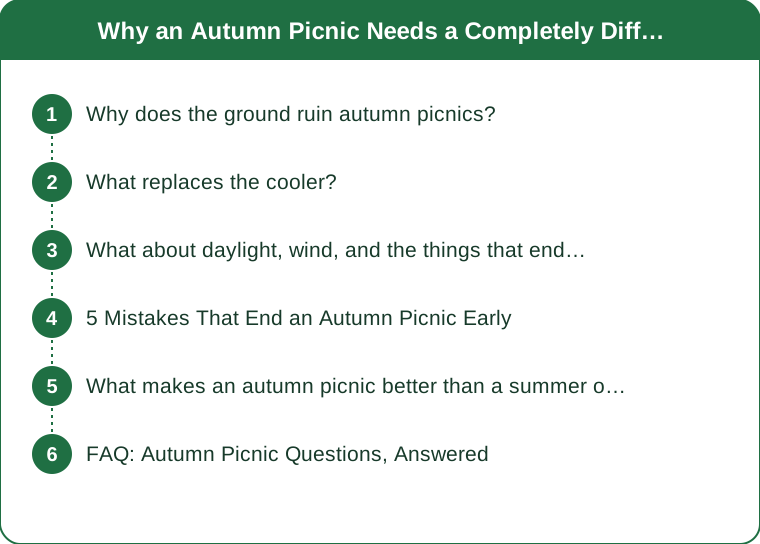
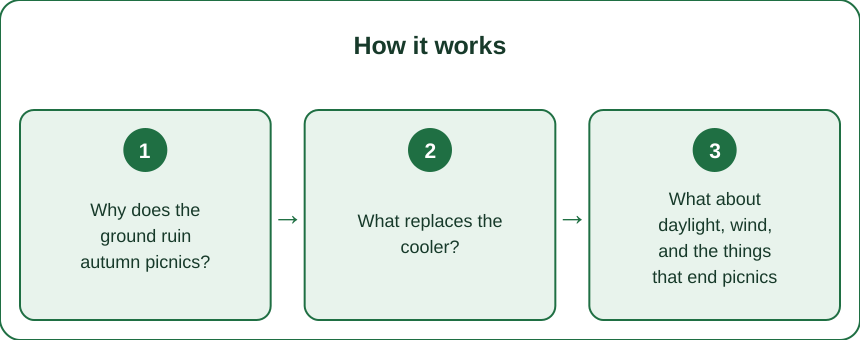
Why does the ground ruin autumn picnics?
Because conductive heat loss through the ground is far faster than heat loss to the air, and nobody plans for it.
Sitting on cool ground pulls heat directly out of your body through contact. You can be perfectly comfortable standing in 60-degree air and genuinely cold sitting on the same site fifteen minutes later. Autumn ground is also damp — dew that never fully burns off, and moisture retained under a leaf layer.
This is the number one reason autumn picnics end early, and people usually blame the air temperature.
The fix is a proper ground stack, in this order:
- Waterproof base layer. A tarp, a picnic blanket with a waterproof backing, or in a pinch a couple of trash bags. This stops moisture coming up.
- Insulating layer. A wool blanket, a foam camping mat, or a folded quilt. This is the layer everyone skips, and it is the one that matters. A thin cotton blanket over damp ground provides essentially no insulation.
- Comfort layer. What you actually sit on.
Even better: bring low chairs or a bench. Getting off the ground entirely solves the problem completely, and folding stools weigh very little.
What replaces the cooler?
Insulation is still the theme; the direction reverses.
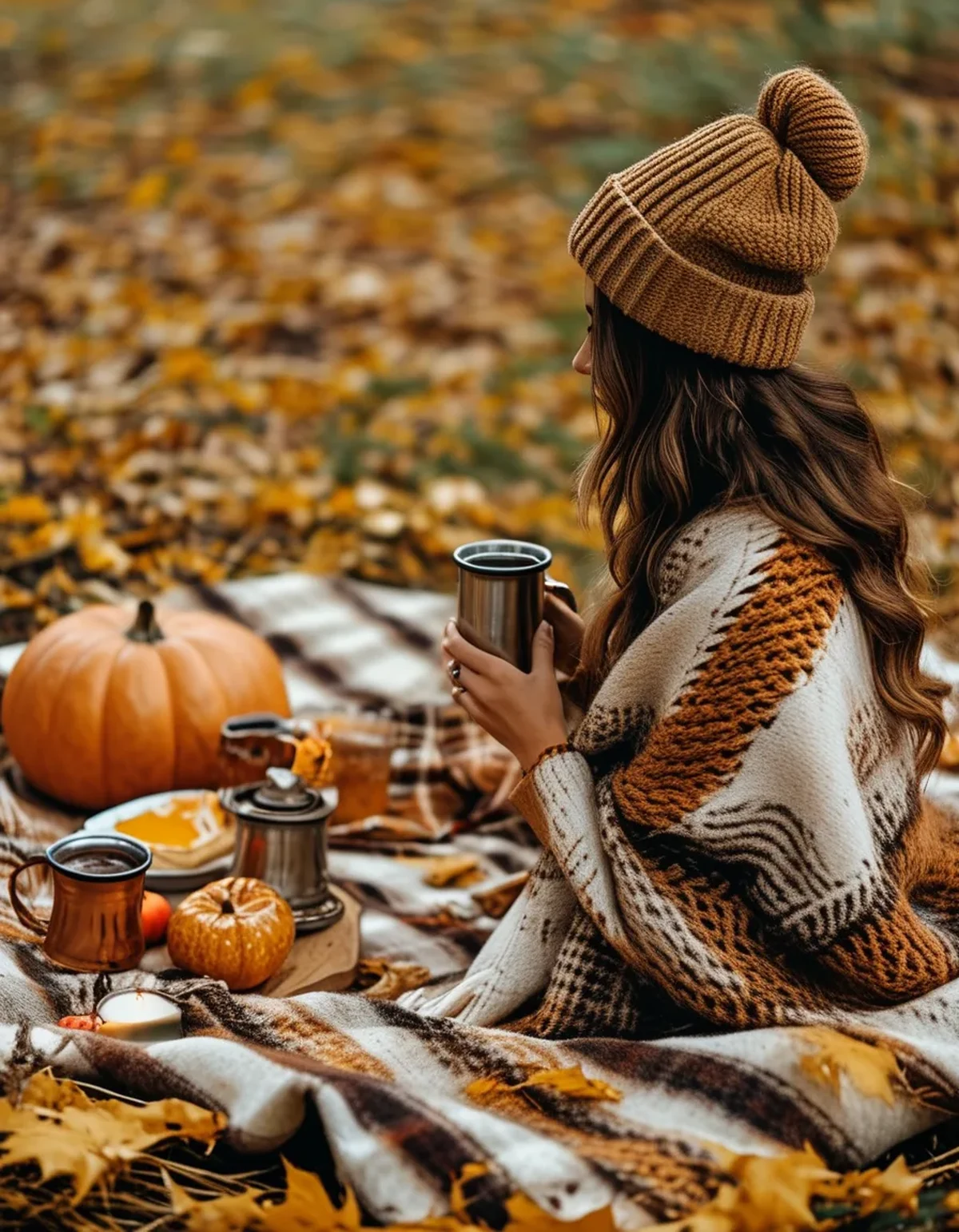
Insulated flasks become the centerpiece. Soup, coffee, mulled cider, hot chocolate. A good vacuum flask holds temperature for many hours, and a hot drink outdoors in autumn is genuinely transformative rather than a nice extra.
A small cooler still has a job, just a smaller one — keeping cold items cold matters less when the ambient temperature is 55°F, so pack lighter on ice and heavier on hot.
Food that is good at ambient temperature is your friend. Autumn ambient is close to ideal for a lot of foods that suffer in summer heat: hard cheeses, cured meats, pâté, bakes, quiches, and anything with pastry.
Food that fails: salads with delicate leaves that wilt in the cold and wind, anything that congeals as it cools (fatty sauces, some cheeses), and ice cream for obvious reasons.
Food safety still applies. The two-hour rule for perishable food is shorter in heat and longer in cool weather, but it does not disappear. Below 40°F ambient you have more margin; between 40°F and 90°F, two hours remains the standard guidance.
What about daylight, wind, and the things that end picnics early?
Three factors that catch people out, in descending order of how often they do.
Daylight disappears faster than you plan for. A 4pm picnic in September is comfortable; by late October the same start time means packing up in the dusk. The temperature drops sharply the moment the sun goes — often 10 degrees in the half hour after sunset. Check the actual sunset time and plan to be finishing, not starting, an hour before it.
Wind matters more than temperature. A still 52-degree day is lovely for a picnic. A 60-degree day with a 15 mph wind is not, and wind also makes everything harder logistically — napkins, plates, the blanket itself.
- Choose a site with a windbreak. A hedge, a wall, a dip in the ground, the lee side of a stand of trees.
- Weight everything. A basket at each corner of the blanket, and a heavy item on any stack of napkins or plates.
Wet ground is not always visible. Grass that looks dry in a shaded spot in October often is not. Press your hand down for a few seconds before you commit to a site — if your palm is damp, the blanket will be too.
5 Mistakes That End an Autumn Picnic Early
1. One blanket instead of three layers. The single most common failure. Waterproof, insulating, comfortable — and the middle one is not optional.
2. Underdressing because it feels mild when you arrive. You will be sitting still for two hours in falling temperatures. Bring a warmer layer than the walk from the car suggests, plus a hat — heat loss from the head while sitting still is substantial.
3. Forgetting hands. Cold hands make everything unpleasant and are the first thing people notice. Gloves and a hot drink to hold solve most of it.
4. Choosing a site by the view rather than by the wind. The exposed hilltop with a beautiful view is the worst possible picnic site in autumn. Views are available on the walk; sit somewhere sheltered.
5. No plan for the last twenty minutes. Packing up in fading light, cold, with damp things is grim. Pack up while you are still comfortable, then take a walk if you want more time outside.
What makes an autumn picnic better than a summer one?
Worth saying, because the whole framing so far has been about hazards. Autumn genuinely outperforms summer on several fronts.
No insects. Wasps, in particular, make late-summer picnics miserable and are largely gone after the first cold nights. This alone is a major upgrade.
Better light and better places. Golden-hour light in autumn is exceptional, foliage is at its best, and popular spots that are crowded in July are usually empty.
Better food. Autumn cooking suits picnics — savory bakes, roasted vegetables, hearty breads, apple and pear everything, soup. Summer picnic food is largely constrained by what survives heat.
No shade requirement. You can sit wherever the view is best rather than wherever the tree is, and the sun feels pleasant rather than punishing.
A hot drink outdoors in the cold is a genuinely good experience in a way that has no summer equivalent. It is worth planning the whole picnic around.
A fire pit or portable stove, where permitted, turns a good autumn picnic into an excellent one. Check local rules first — fire restrictions vary and dry autumn conditions sometimes tighten them.
FAQ: Autumn Picnic Questions, Answered
How cold is too cold for a picnic?
With proper ground insulation, layers, and hot drinks, people picnic comfortably well into the 40s. The limiting factors are wind and wet, not the number on the thermometer. A still 45-degree day is far more pleasant than a windy 58-degree one.
Do I still need to worry about food safety in cool weather?
Yes, though you have more margin. Standard guidance is two hours for perishable food in the 40-90°F range, and cool autumn air keeps you at the safer end of that. What changes is that hot food is now the thing to manage — keep it above 140°F in a good flask, or accept that it will be eaten at ambient temperature.
What is the single best thing to add to a summer picnic kit for autumn?
A foam camping mat or a wool blanket for under your sitting blanket. It costs very little, weighs almost nothing, and it is the difference between a two-hour picnic and a forty-minute one. Second place goes to a large vacuum flask.
TL;DR:
- Cold, damp ground ends autumn picnics, not cold air — build a three-layer ground stack or bring low chairs.
- Swap most of the cooler for insulated flasks; autumn ambient temperature is ideal for a lot of picnic food.
- Plan around sunset, and expect a sharp temperature drop the moment the sun goes.
- Pick your site for wind shelter rather than for the view, and weight everything down.
- Bring a hat and gloves, and pack up while you are still comfortable.
Autumn picnics beat summer ones on light, food, crowds, and the complete absence of wasps. They only ask you to solve one problem summer never posed, and a wool blanket solves it.
Keep Reading
This article is for general informational purposes only and is not medical advice. Always consult a qualified health professional for guidance specific to you.