Why Late-August Picnic Food Spoils Faster Than the Same Food Did in July
Quick Answer: Late-August air often feels cooler than July, but ground temperature is at its seasonal peak, humidity is higher, and picnics run longer because the weather is pleasant. Food safety depends on how long food sits between 40F and 140F, not on how the air feels. The three changes that matter most are elevating the cooler off the ground, packing two smaller coolers instead of one large one, and setting a two-hour timer the moment the lid opens.
The same potato salad, the same cooler, the same park. In July you were careful. In late August you were not, because it felt fine.
That is the trap, and the thermometer explains why.

Why does food spoil faster in late summer than in mid-summer?
Ground temperature lags air temperature by weeks. Soil and pavement absorb heat all season and release it slowly, which is why late August ground is warmer than July ground even on a cooler day. A cooler set directly on grass is being heated from below the entire time.
Humidity is typically higher late in the season, and humid air transfers heat into a cooler faster than dry air of the same temperature. It also keeps condensation on food surfaces, which bacteria appreciate.
Picnics simply last longer when the weather is pleasant. A 95F July afternoon produces a fast lunch and a retreat to the car. An 80F late-August evening produces a four-hour lounge, and time in the danger zone is the actual variable.
The danger zone is 40F to 140F, and the standard guidance is two hours of cumulative exposure - one hour if the ambient temperature is above 90F. Cumulative is the word people miss: the clock does not reset when you put the lid back on.
Insects are at their seasonal peak too, and while a yellowjacket on the fruit is not a food-safety issue on its own, the constant lid-opening it produces is.
And cooler ice melts faster than you expect at moderate temperatures, because the loss is driven by hours of exposure more than by peak heat.
How should you actually pack a picnic cooler?
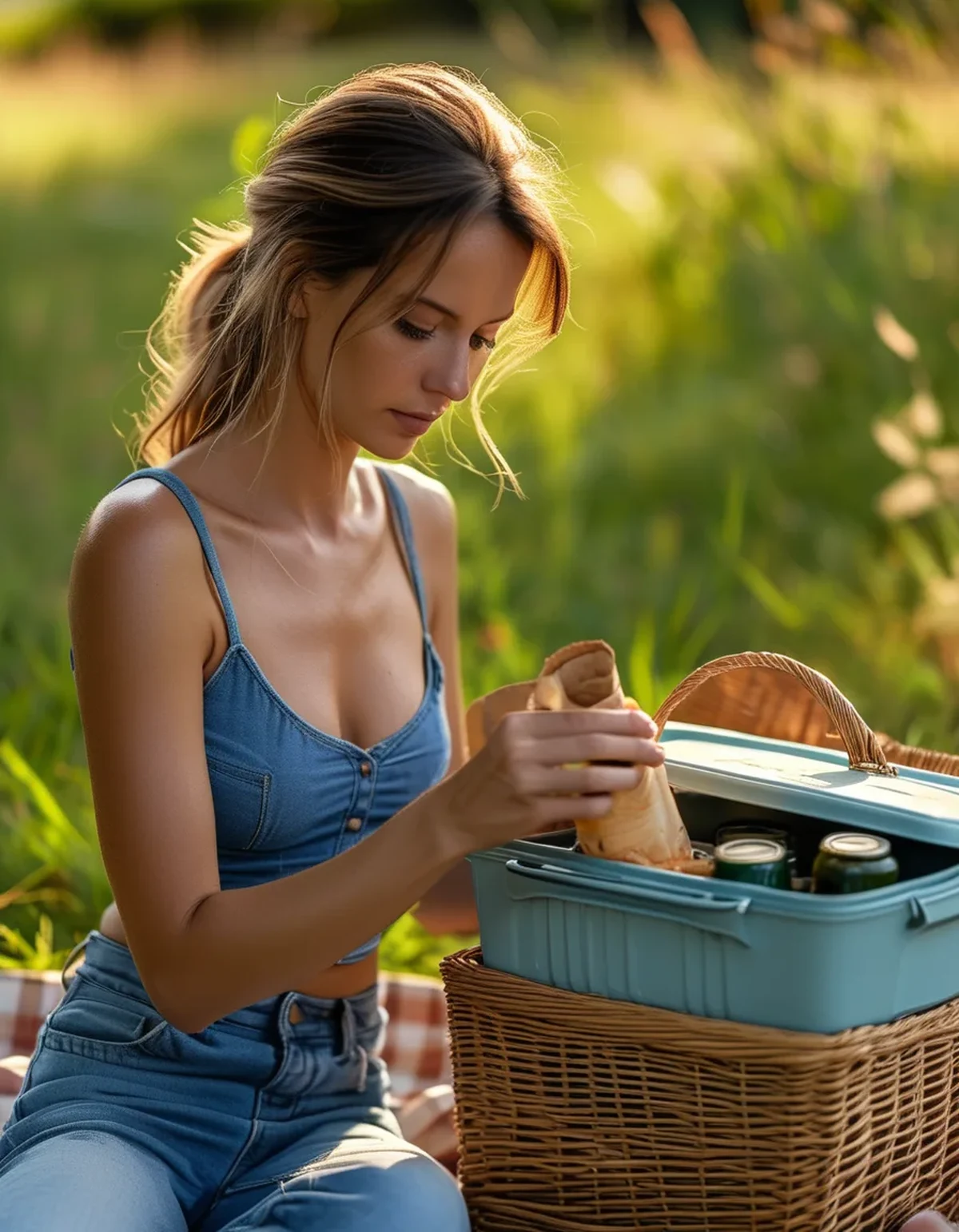
Chill everything before it goes in. A cooler maintains temperature; it does not lower it meaningfully. Room-temperature food loaded into ice takes hours to come down, and those are hours in the danger zone.
Use two coolers, not one. A drinks cooler gets opened twenty times an hour; a food cooler should get opened twice. Combining them means your chicken salad experiences every single beverage run.
Fill it completely. Air is the enemy - empty space warms fast. Pack gaps with extra ice, frozen water bottles or crumpled towels.
Frozen water bottles beat loose ice for anything you do not want swimming. They melt into drinking water and they keep the base cold longer.
Pack in reverse order of use, with the food you need last on the bottom. Every rummage costs cold air.
Keep the cooler in the shade and off the ground, ideally on a bench, a chair or a folded blanket. This single change is worth several degrees over an afternoon.
And cover the closed cooler with a light-coloured towel if it will sit in intermittent sun. It is a trivial step with a measurable effect.
Which picnic foods are actually risky, and which are not?
The high-risk group is anything with dairy, eggs, mayonnaise, cooked meat, cut melon or cooked rice. These are the foods that need to stay under 40F and to come home with you if they have been out too long.
Cut melon deserves a specific mention because people treat fruit as automatically safe. Cut melon is a well-documented vehicle for foodborne illness precisely because it is low-acid, high-moisture and usually served last, after hours on a table.
Cooked rice and pasta are riskier than they look. Bacillus cereus spores survive cooking and multiply at room temperature, and reheating does not reliably fix it. Keep grain salads cold or leave them home.
Hard cheeses, whole fruit, breads, crackers, nuts and most baked goods are genuinely low-risk and are what you build a long, relaxed picnic around.
Vinegar-based dressings buy you real margin over creamy ones, which is why a slaw with cider vinegar travels far better than one with mayonnaise.
And commercially made mayonnaise is more acidic and more stable than homemade, so the folk wisdom that mayonnaise is the villain is only half right - the chicken, egg and potato it is mixed with are usually the actual problem.
Myth vs Fact: Picnic Food Safety
Myth: if it still smells fine, it is fine. Fact: the bacteria that cause foodborne illness generally do not change smell, taste or appearance. Spoilage bacteria do, and those are the harmless ones. Smell tests detect the wrong organism.
Myth: putting it back in the cooler resets the clock. Fact: exposure is cumulative across the whole day. Three separate forty-minute stints is two hours.
Myth: a cool day means you can relax. Fact: 75F is comfortably inside the danger zone. Ambient comfort and food safety are unrelated questions.
Myth: ice packs last all day. Fact: most frozen gel packs give three to four hours in a partly full, repeatedly opened cooler. Full and rarely opened, they last far longer - which is the whole argument for the two-cooler system.
Myth: reheating leftovers makes them safe. Fact: heat kills bacteria but does not destroy the toxins some of them have already produced. This is exactly the Bacillus cereus problem with rice.
Myth: kids and adults have the same margin. Fact: young children, older adults, pregnant people and anyone immunocompromised have a meaningfully lower threshold, which is a good reason to be the strict one at the family picnic.
What is a realistic system for a four-hour picnic?
Set a timer when the food cooler first opens. Two hours, or one hour above 90F. A phone timer removes the negotiation entirely, and the negotiation is where people lose.
Serve in waves rather than laying everything out. Bring out one dish, return it, bring out the next. Food on the table is on the clock; food in the cooler is not.
Use a shallow serving dish nested in a larger one filled with ice for anything creamy that has to sit out. It costs nothing and it works.
Decide before you leave what comes home and what does not. Anything in the high-risk group that has passed the timer goes in the trash at the park, not in the cooler for tomorrow.
Bring a cheap fridge thermometer and drop it in the food cooler. Under 40F is the target, and seeing an actual number changes behaviour more than any rule does.
Plan the menu around the length of the picnic. A two-hour lunch can carry a potato salad. A four-hour evening in the park should be built from cheese, bread, whole fruit, cured meat and hummus, all of which are genuinely fine.
And pack hand sanitiser or wipes, because cross-contamination from hands is a larger contributor at picnics than temperature is, and it is the one nobody plans for.
FAQ: Late-Summer Picnic Questions, Answered
How long can food safely sit out at a picnic?
Two hours cumulative between 40F and 140F, or one hour if it is above 90F. Cumulative means all the periods added together, not the longest single one.
Does a cooler in the car trunk count as refrigeration?
No. A trunk is one of the hottest places available on a summer afternoon and regularly exceeds outdoor temperature by a wide margin. Coolers ride in the passenger compartment.
Is it safe to bring leftovers home from a picnic?
Only if they stayed under 40F throughout - which in practice means they never left the cooler. Anything that sat on the table past the timer should be discarded.
Do I need to worry if the day is only 75F?
Yes, for the high-risk foods. 75F is squarely in the danger zone and the two-hour rule applies fully. Cool weather changes comfort, not microbiology.
What are the safest foods for a long outdoor afternoon?
Hard cheese, cured meat, bread, crackers, nuts, whole uncut fruit, hummus, and vinegar-dressed vegetable salads. You can build a genuinely good spread from these and stop watching the clock.
Should I be worried about insects landing on the food?
It is mostly a nuisance rather than a hazard, but keep food covered with mesh domes. The real cost of insects is the repeated lid-opening they cause.
TL;DR:
- Late-summer ground temperature and humidity peak after air temperature does, so coolers work harder than they feel like they should.
- The danger zone is 40F to 140F and exposure is cumulative - two hours total, one hour above 90F.
- Run two coolers: drinks get opened constantly, food should be opened twice.
- Cut melon, cooked rice, and anything with egg, dairy or cooked meat are the genuine risks; bread, hard cheese and whole fruit are not.
- Smell tests do not detect the bacteria that make people ill.
- Set a phone timer when the food cooler first opens and let the timer make the decision.
The cooler weather is exactly why people get caught. Pack for the ground temperature, not the air. This is general information, not medical advice.
Keep Reading
This article is for general informational purposes only and is not medical advice. Always consult a qualified health professional for guidance specific to you.