Why the Picnic Food Safety Two-Hour Window Is Shorter Than It Actually Feels
Quick Answer: The standard food safety guidance that perishable food shouldn’t sit in the 40-140°F temperature danger zone for more than two hours (one hour above 90°F) starts counting from when food leaves proper refrigeration or heat, not from when the picnic actually begins — meaning prep time, drive time, and setup all eat into that window before the first bite is even taken.
The two-hour clock doesn’t politely wait for the picnic to start. It starts the moment food leaves the fridge, which is usually well before anyone’s actually eating.

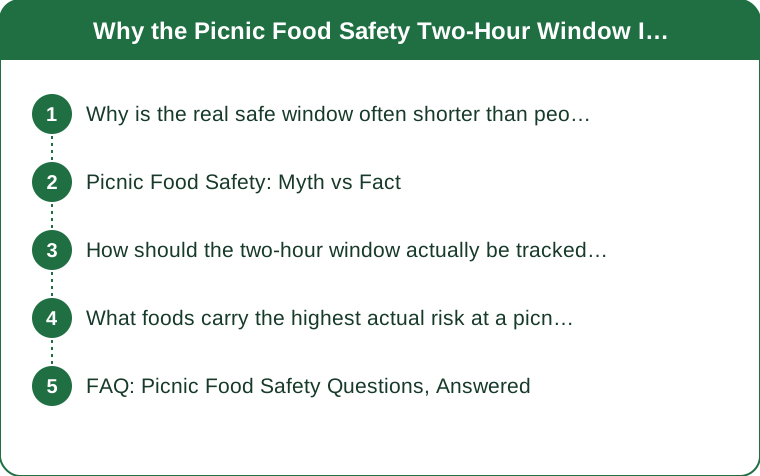
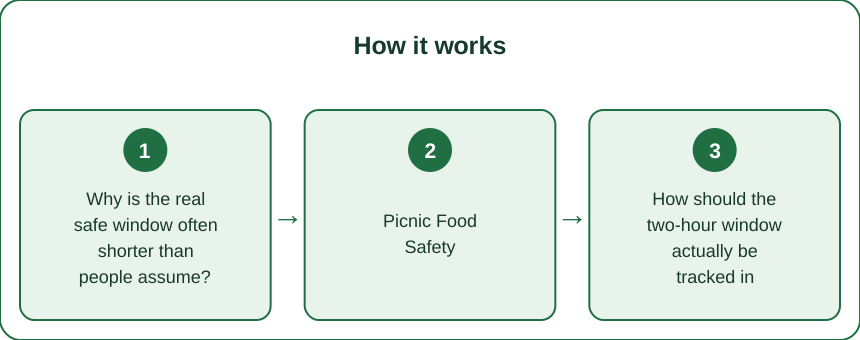
Why is the real safe window often shorter than people assume?
The two-hour countdown begins the moment perishable food leaves refrigeration or a proper heat source, not when eating actually starts — packing time, a 30-45 minute drive, and picnic setup can easily consume half or more of that total window before food is even served.
On a hot day above 90°F, this window shrinks to just one hour total, making the real margin for error considerably tighter than the standard two-hour figure suggests without accounting for these earlier stages.
Picnic Food Safety: Myth vs Fact
Myth: food looks and smells fine, so it’s still safe. Fact: the bacteria responsible for foodborne illness in this temperature range typically don’t produce any noticeable smell or visual change, meaning appearance and smell are not reliable safety indicators for this specific risk.
Myth: a cooler alone is enough regardless of how it’s packed. Fact: a cooler’s actual effectiveness depends heavily on ice-to-food ratio and how often it’s opened — a poorly packed or frequently opened cooler can allow food to warm into the danger zone well before the outing ends.

How should the two-hour window actually be tracked in practice?
Starting the mental clock at the moment food leaves the refrigerator at home, not at the moment the picnic blanket goes down, gives a more accurate real safety margin.
Packing perishable items in a well-iced cooler right up until serving, rather than setting them out on the blanket early to “get ready,” meaningfully extends the practical safe window within that same two-hour total.
What foods carry the highest actual risk at a picnic specifically?
Mayonnaise-based salads, dairy products, and any prepared protein (chicken, egg dishes) carry meaningfully higher risk in the danger zone than items like whole fruit, chips, or bread, which are far more forgiving of extended time at outdoor temperatures.
Prioritizing extra ice specifically around these higher-risk items, rather than distributing cooler space evenly, is a practical way to manage the real risk without needing to track every single food item’s time separately.
FAQ: Picnic Food Safety Questions, Answered
Does reheating food after it’s been in the danger zone make it safe again?
No — once perishable food has spent more than the safe window in the danger zone, reheating does not reliably eliminate the risk and the food should generally be discarded.
Is the two-hour rule the same for all perishable foods?
The general two-hour (or one-hour above 90°F) guidance applies broadly to perishable foods, though very high-risk items like raw poultry warrant even more caution and minimal time outside proper temperature control.
What’s the single most practical fix for extending the real safe window at a picnic?
Packing higher-risk perishable items last, right before leaving, and keeping them iced until the moment of serving addresses most of the hidden time loss from prep and travel.
TL;DR:
- The two-hour safety clock starts at refrigeration exit, not at picnic start, shrinking the real window
- Appearance and smell are not reliable indicators of this specific bacterial risk
- A well-packed, appropriately iced cooler meaningfully extends the practical safe window
- Mayo-based, dairy, and prepared protein items carry the highest relative risk and deserve extra ice priority
The two-hour rule isn’t wrong — it’s just measuring from an earlier point than most people assume, which is exactly why it feels shorter in practice than it sounds on paper. This is general information, not medical advice.
Keep Reading
This article is for general informational purposes only and is not medical advice. Always consult a qualified health professional for guidance specific to you.