Why Picnic Food Tastes Different Outdoors Than It Did at Home
Quick Answer: Food genuinely can taste different outdoors due to a combination of factors — cooler ambient temperature dulling some flavor perception, background noise and open-air acoustics subtly reducing perceived flavor intensity (a documented effect), and temperature changes in the food itself during transport — meaning the taste difference isn’t imagined, it’s a real, multi-factor sensory effect.
It’s not nostalgia or imagination making outdoor food taste different. Several real, documented sensory factors are actually changing the eating experience itself.

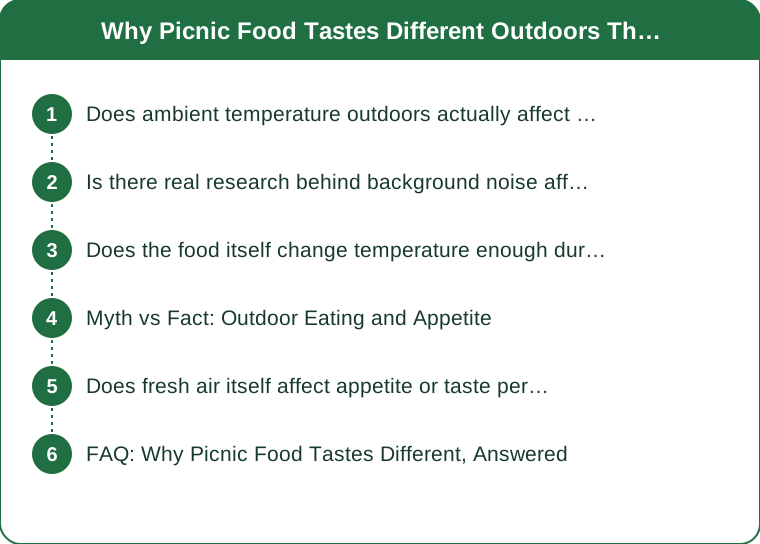
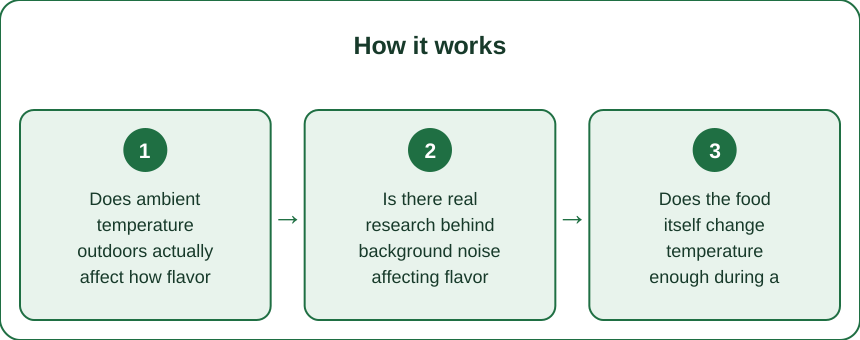
Does ambient temperature outdoors actually affect how flavor is perceived?
Yes — taste perception, particularly sweetness, is measurably affected by temperature, and food that’s cooled somewhat during outdoor transport or sitting in open air can taste subtly less sweet or less intensely flavored than the same dish eaten warm or at controlled indoor temperature shortly after preparation.
Is there real research behind background noise affecting flavor perception outdoors?
Yes — this is a documented phenomenon sometimes studied in the context of airline food (a related, well-known example), where loud ambient noise measurably dulls perceived sweetness and saltiness; outdoor picnic settings, with wind, traffic, or general ambient noise, can produce a milder version of this same noise-related flavor-dulling effect.
Does the food itself change temperature enough during a picnic to matter for taste?
Often yes — food transported in a cooler or sitting out for even 30-60 minutes shifts noticeably from its ideal serving temperature, and many dishes are formulated or seasoned to taste best at a specific temperature, meaning a picnic dish eaten meaningfully warmer or cooler than intended can taste flatter or different than the same dish freshly prepared.

Myth vs Fact: Outdoor Eating and Appetite
Myth: food just tastes better outdoors because of nostalgia or the general pleasantness of the setting alone. Fact: while mood and setting genuinely do influence enjoyment, there are also real, measurable sensory mechanisms — temperature and ambient noise among them — independently altering flavor perception, not just the overall psychological experience.
Does fresh air itself affect appetite or taste perception in a documented way?
There’s some evidence that physical activity often associated with outdoor settings (walking to a picnic spot, general movement) can genuinely increase appetite and therefore food enjoyment, separate from and in addition to the direct sensory factors of temperature and noise.
FAQ: Why Picnic Food Tastes Different, Answered
Does this mean picnic food should be seasoned differently than food meant for indoor eating?
Some experienced picnic planners do season slightly more assertively for outdoor dishes, anticipating that ambient noise and temperature may mute perceived flavor intensity somewhat compared to the same dish indoors.
Is there a way to minimize the temperature-related flavor change for transported picnic food?
Using an insulated container and minimizing the time between preparation and eating helps preserve more of the food’s intended serving temperature and, by extension, its intended flavor profile.
Does this flavor-perception effect apply the same way to drinks as to food?
Yes, similarly — temperature changes and ambient noise can affect perceived sweetness and flavor intensity in beverages during a picnic much the same way they affect solid food.
TL;DR:
- Cooler ambient and food temperature outdoors can genuinely dull perceived sweetness and flavor intensity
- Background noise, a documented effect studied in contexts like airline food, mutes flavor perception similarly outdoors
- Food shifting away from its ideal serving temperature during transport changes how the dish tastes
- Setting and mood matter too, but real sensory mechanisms are independently at play, not just psychological enjoyment
Next picnic, season slightly more assertively and use insulated transport — both directly counter the real sensory reasons outdoor food tastes different.
Keep Reading
This article is for general informational purposes only and is not medical advice. Always consult a qualified health professional for guidance specific to you.