Why the Exact Same Food Tastes Noticeably Different at a Picnic Than It Did at Home
Quick Answer: Outdoor eating changes flavor perception through several compounding factors — background noise and open air disperse aroma molecules faster (reducing perceived flavor intensity, since smell is a major component of taste), while temperature, ambient distractions, and even the psychological association of being outdoors all shift how the same food is experienced compared to eating it at home.
The sandwich genuinely does taste different at a picnic than it did in your kitchen — and there’s real sensory science behind why, not just a change in mood.

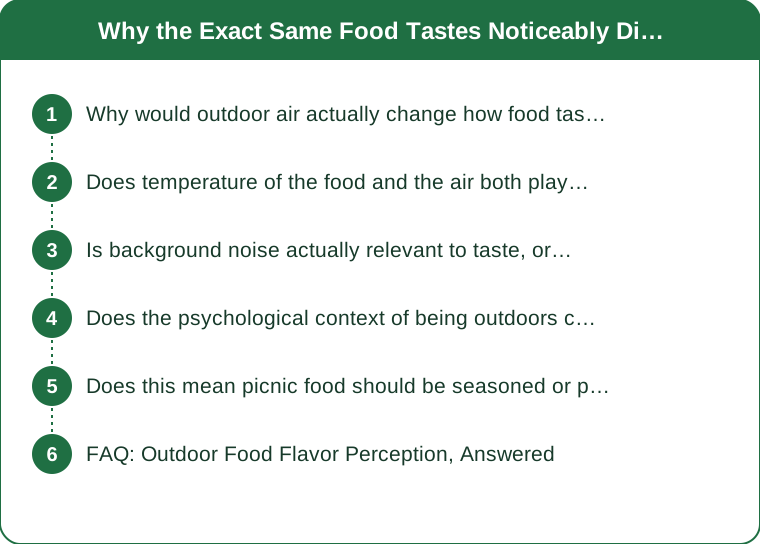
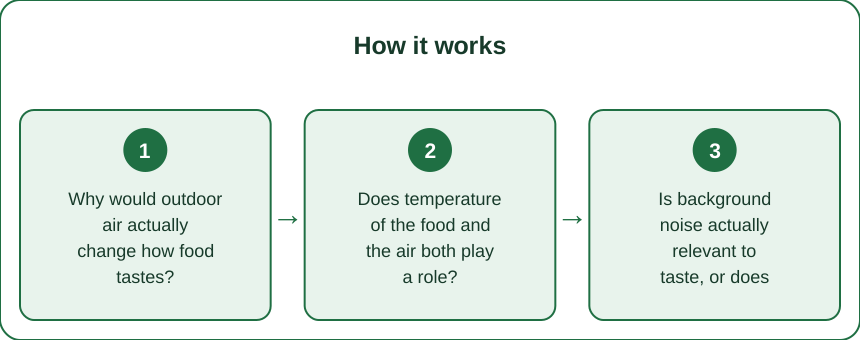
Why would outdoor air actually change how food tastes?
A significant portion of what we perceive as ‘taste’ is actually smell, detected via aroma molecules traveling from the mouth to the nasal cavity — in an enclosed indoor space, those aroma molecules concentrate and linger, while outdoor air disperses them much faster, which can measurably reduce perceived flavor intensity and complexity for the same food eaten outside versus inside.
Does temperature of the food and the air both play a role?
Yes — food that would stay at an ideal serving temperature indoors cools or warms faster outside depending on conditions, and temperature genuinely affects taste perception (some flavor compounds are more perceptible at certain temperatures). A sandwich that was at ideal temperature when packed can taste subtly different by the time it’s eaten if ambient outdoor temperature has shifted it.
Is background noise actually relevant to taste, or does that seem like a stretch?
It’s a documented effect — research on multisensory flavor perception has found that background noise level can measurably affect perceived sweetness, saltiness, and overall flavor intensity, with louder ambient environments (which outdoor settings, especially near roads or play areas, commonly are) generally associated with somewhat dulled taste perception compared to quiet settings.

Does the psychological context of being outdoors change taste perception too?
Likely some — expectation and context are known to influence flavor perception generally (this is well documented in food and beverage research), and eating in a novel, pleasant outdoor setting can create a genuinely different overall experience of the same food, separate from the more measurable sensory factors like aroma dispersal and temperature.
Does this mean picnic food should be seasoned or prepared differently than the same meal at home?
Many picnic-focused food guidance does suggest this — slightly more assertive seasoning, and foods that hold their temperature and texture well outdoors, can help compensate for the aroma-dispersal and temperature-shift factors that tend to mute perceived flavor in an outdoor setting compared to how the same recipe would taste freshly served indoors.
FAQ: Outdoor Food Flavor Perception, Answered
Does wind specifically make this aroma-dispersal effect stronger?
Yes — more airflow disperses aroma molecules faster, so a breezier picnic spot may show a more pronounced flavor-muting effect than a still, sheltered outdoor spot.
Does this effect apply to drinks as well as food?
Yes, the same aroma-dispersal and temperature-sensitivity principles apply to beverages, which is part of why a drink that tasted a certain way indoors can taste different outdoors too.
Is there a way to counteract the flavor-muting effect for picnic food?
Packing food that’s naturally more aromatic or robustly seasoned, and keeping items insulated to maintain a more consistent temperature, are the two most practical countermeasures.
TL;DR:
- Open outdoor air disperses aroma molecules faster than indoor air, reducing perceived flavor intensity
- Temperature shifts outdoors can change how flavor compounds are perceived compared to at home
- Background noise has a documented, measurable effect on perceived taste intensity
- Slightly bolder seasoning and better temperature insulation help compensate for the outdoor flavor shift
The flavor difference is real, not imagined — outdoor settings genuinely change several sensory inputs that combine to shape how food tastes.
Keep Reading
This article is for general informational purposes only and is not medical advice. Always consult a qualified health professional for guidance specific to you.